AI Writing Tool for Students
Type: Academic / Personal Project
Process: Research + Prototyping + AI Coding
Status: Live, hosted on Vercel. Click here to try it out!
A combination of a classroom assignment and the experience of grading essays as a Teaching Assistant made this project come to life. I was excited to build something with AI and embrace this new era of digital prototyping.
The Problem Space - Writing
With Large Language Models (LLMs) getting more advanced, new ways of integrating AI into
writing are emerging. With the increasing availability of this capability on various
platforms, the risk becomes of AI taking over human thinking, and contributing more
than required to a person’s personal voice and thought process. The question of agency
and creative contribution of AI to a written piece of work is becoming more relevant.
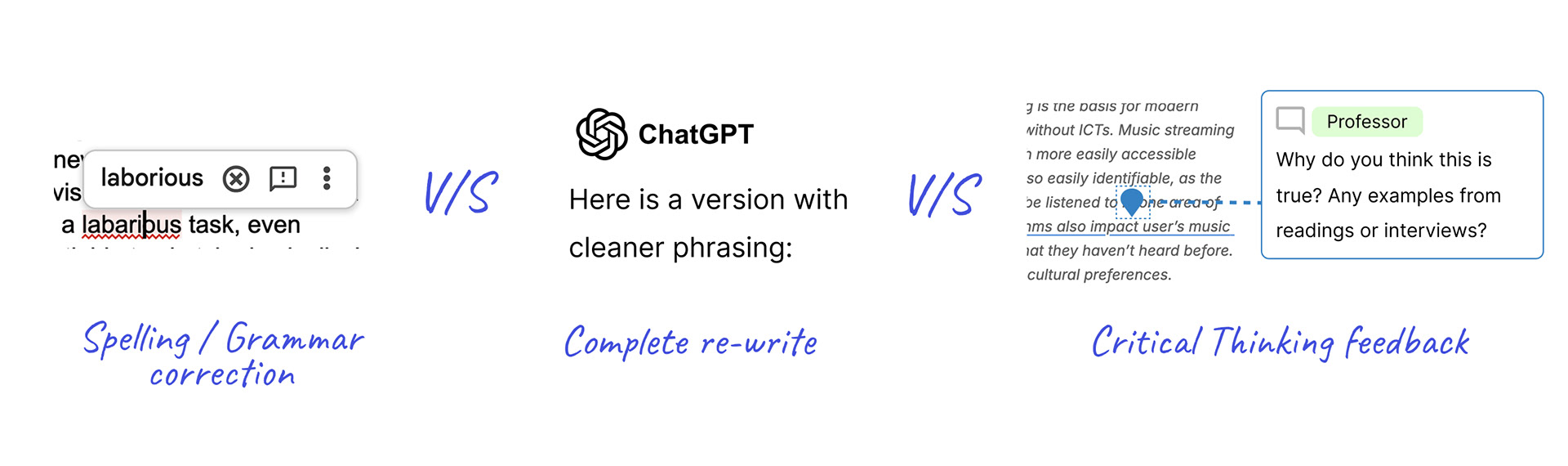
The work of thinking, articulating and putting thoughts on to paper is the work that helps students learn the subject material. It is a valuable space to look into designing AI tools that don’t do the student’s thinking work for them, but instead support their learning.
Through interface design, the positive effects of using AI tools can be amplified, while
design strategies can be used to reduce effects that hamper creativity and increase
over-reliance on AI.
Research tells us that..
AI's impact on writing, creativity, confidence and agency is a widely studied topic. Insights on interaction patterns & psychological perception of tools helped me make design decisions for project. Read the complete essay in this document.

AI can have positive effects on writing - helping with unique ideas and quality of writing as opposed to writing just manually, without any AI input.
Doshi & Hauser (2024)
Doshi & Hauser (2024)
Sentence - level suggestions → promote original content creation
Whole Text - level suggestions → improve efficiency
Fu et al. (2023)
Fu et al. (2023)

Seeing AI as a lower social referent in creative tasks can help boost people's morale, and confidence in their own work.
Reich & Teeny (2025)
Reich & Teeny (2025)

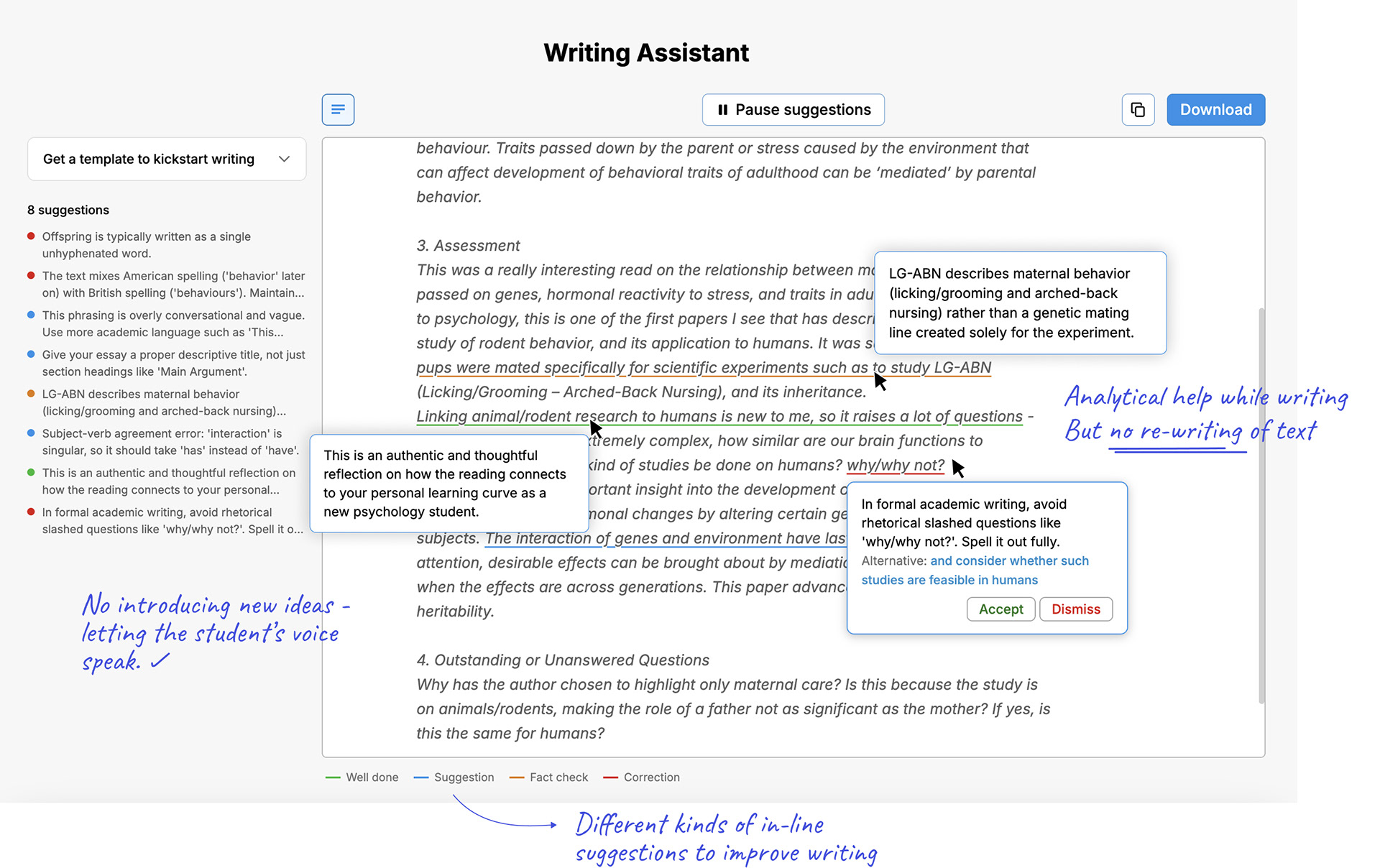
In-Line suggestions maintain the feeling of agency and control over written content. Deep engagement with the text happens when these suggestions are considered.
Fu et al. (2023)
Fu et al. (2023)
Why Students?
A space where writing with AI has significant consequences is the classroom. Educators use writing as the primary method to gauge student's understanding of a subject. The process of writing is also an exercise of building clarity of thought, and the ability to articulate an opinion.
Writing in the classroom space has a glaring challenge - the invention of readily available AI tools have taken out the essential effort it takes to write assignments. Educational institutions have adapted policies to restrict the use of AI for schoolwork. But can these rules be enforced? Or another approach needs to be taken, one that takes accepting AI as an inevitable tool in writing?
Writing in the classroom space has a glaring challenge - the invention of readily available AI tools have taken out the essential effort it takes to write assignments. Educational institutions have adapted policies to restrict the use of AI for schoolwork. But can these rules be enforced? Or another approach needs to be taken, one that takes accepting AI as an inevitable tool in writing?
The Proposed Idea
This project picks the common creative task - writing - as the medium, and
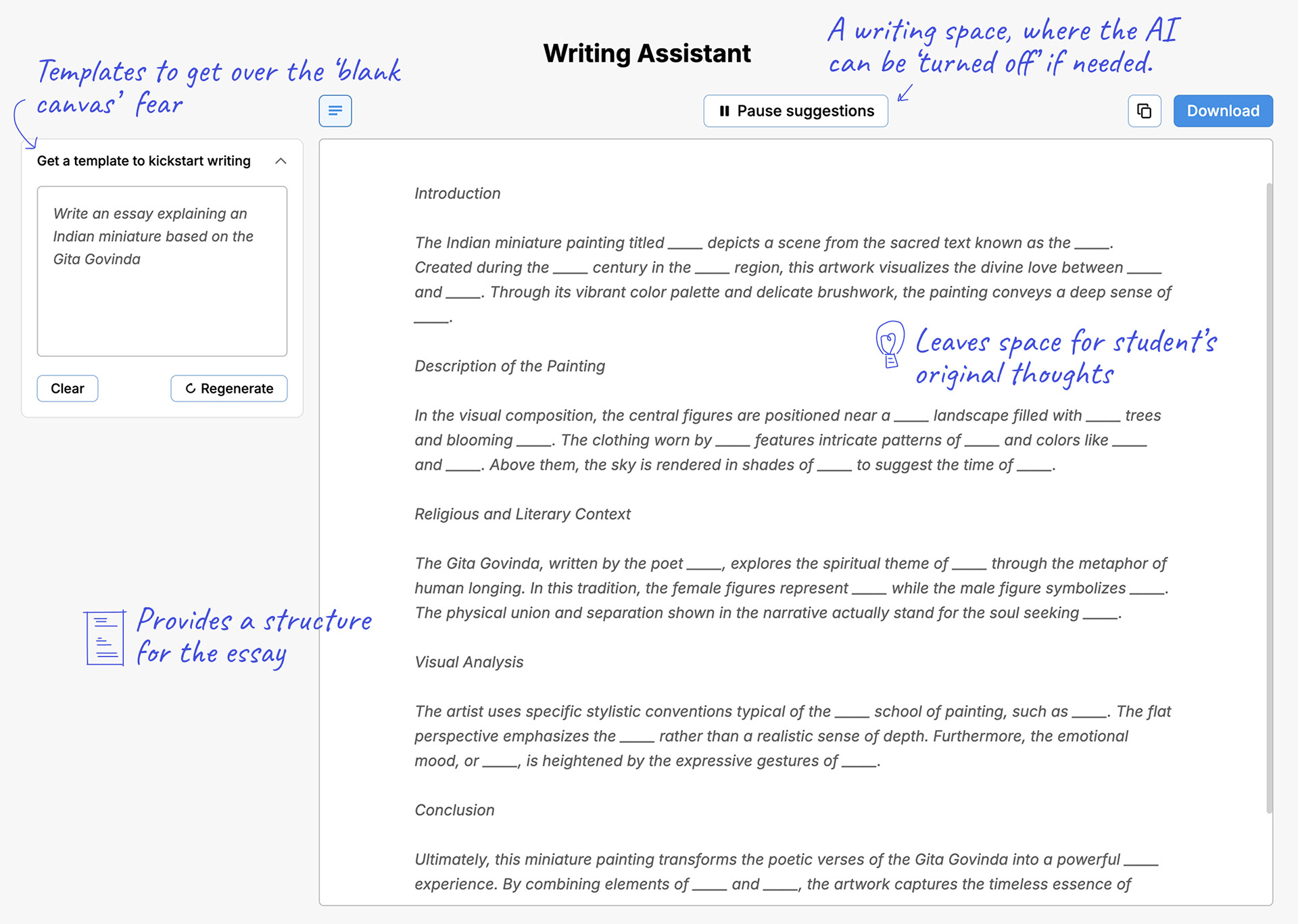
proposes an AI tool that helps students in the ‘process’ of writing, rather than providing end outputs that can be copy-pasted.
The development story...
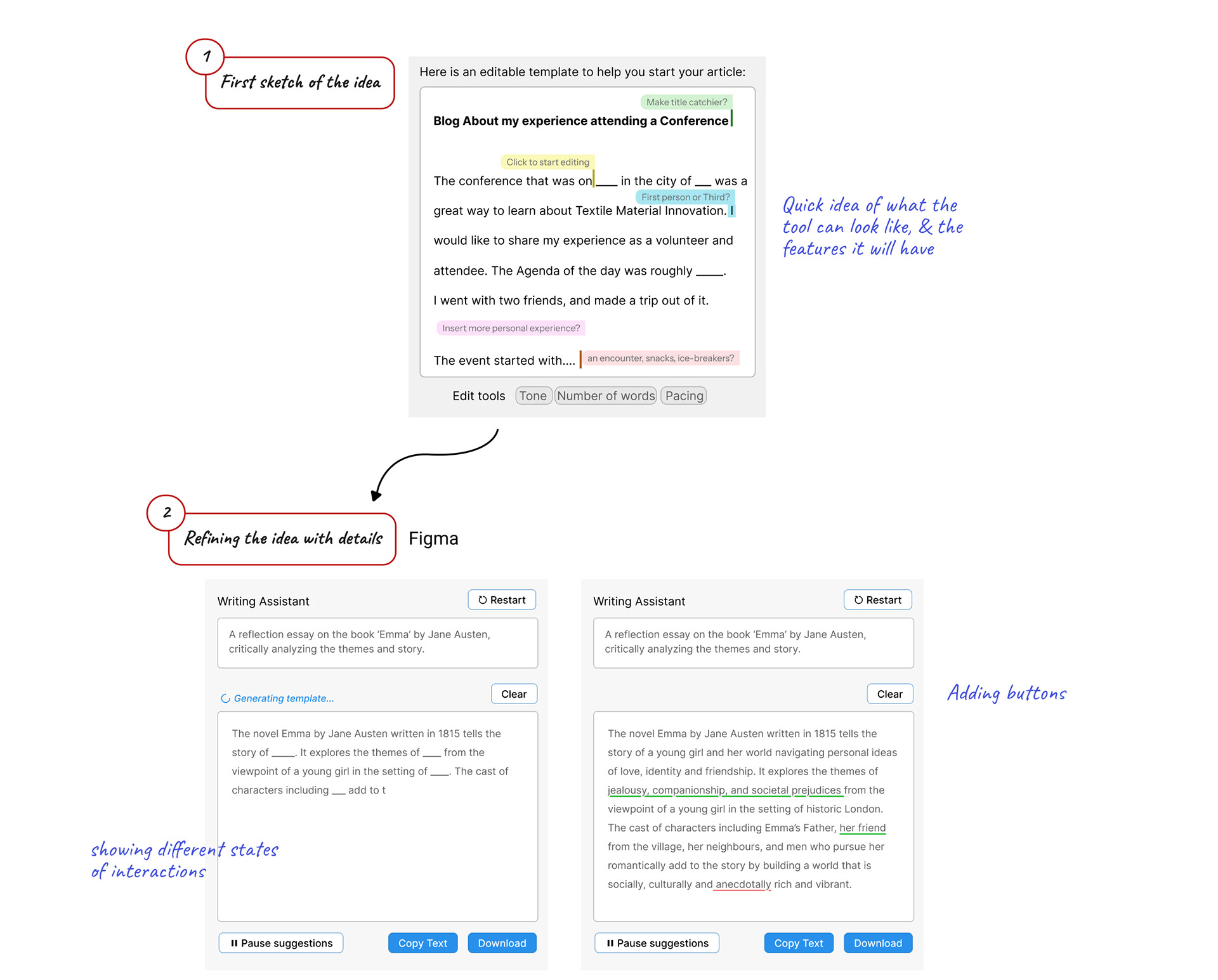
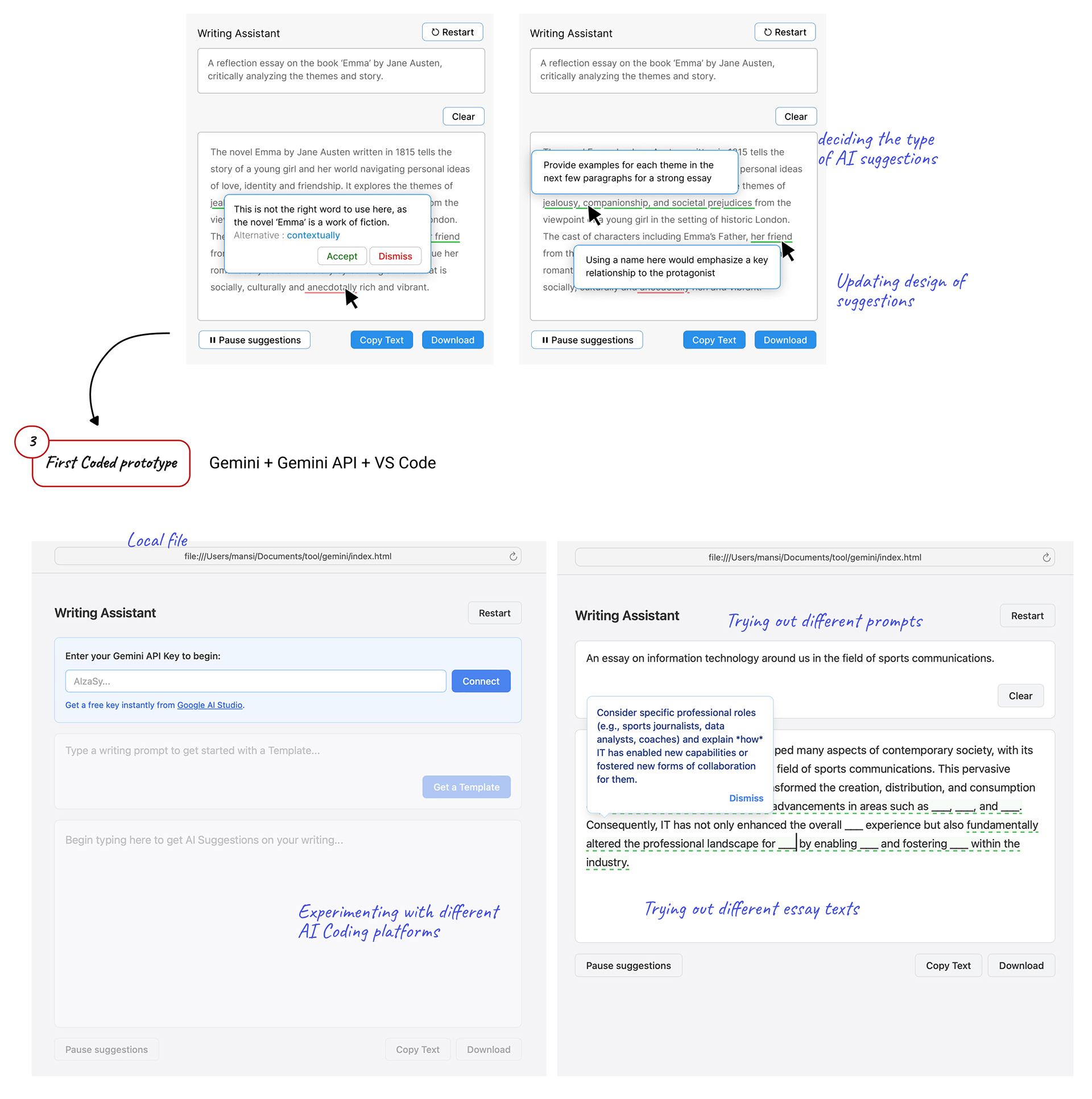
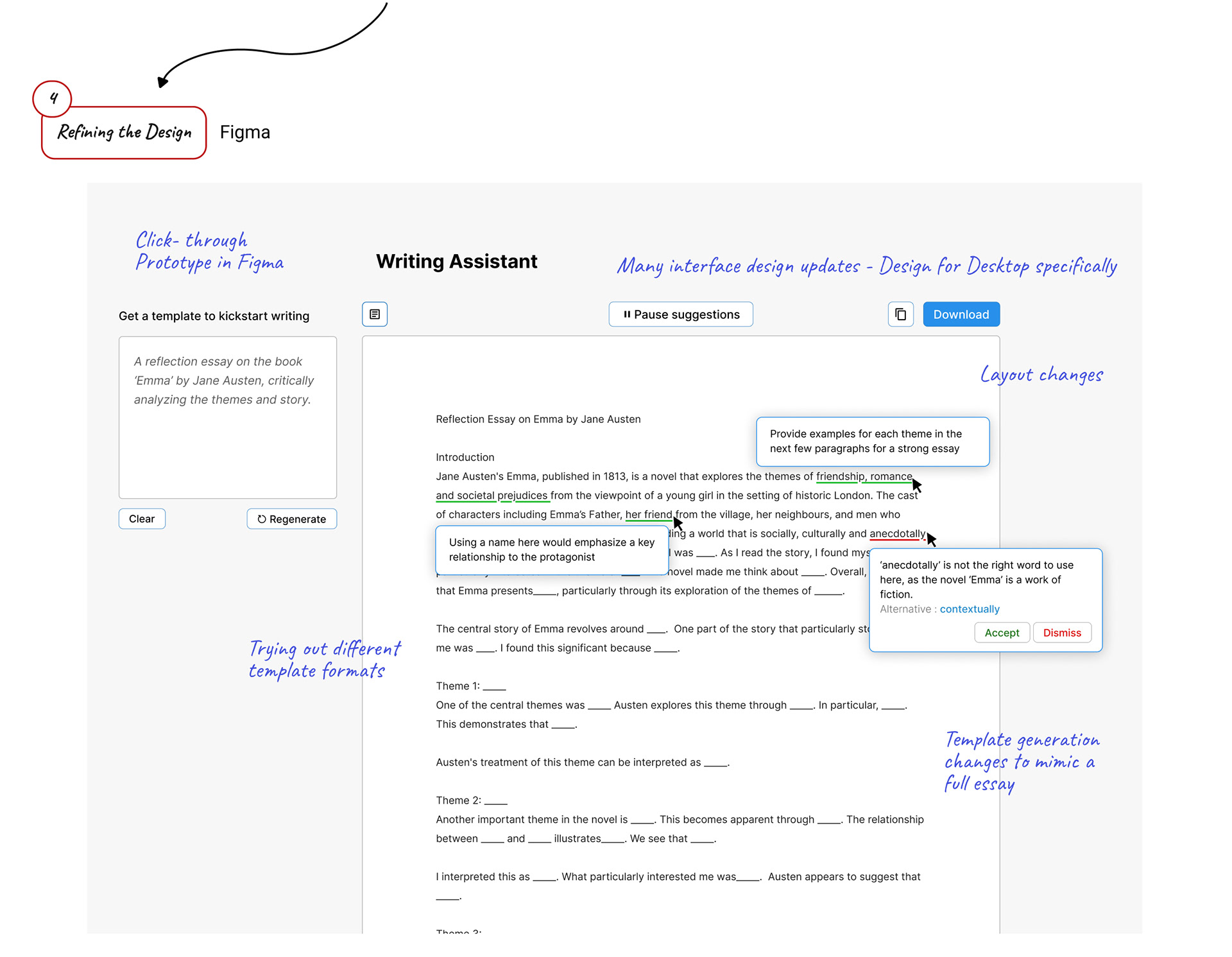
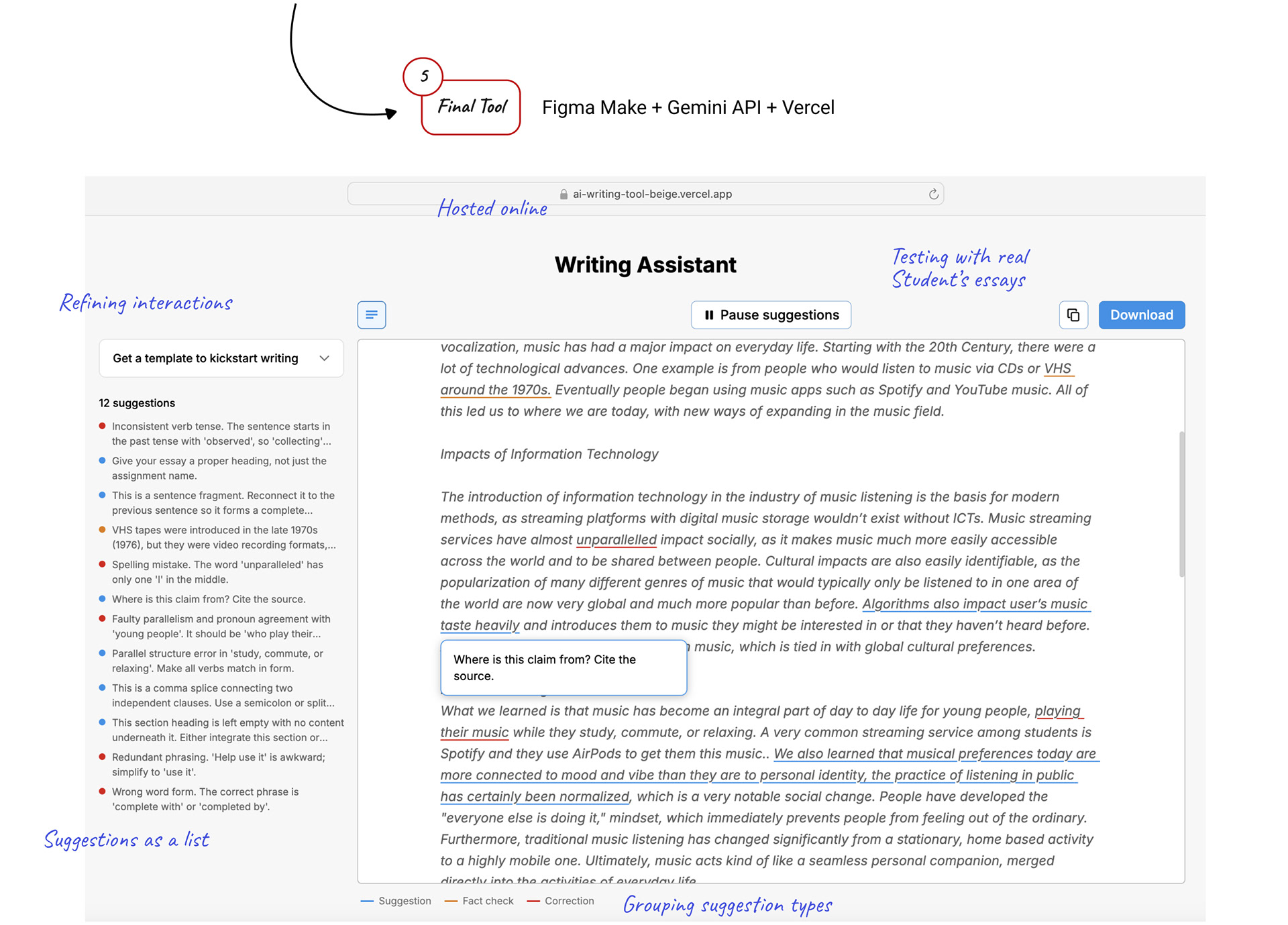
Reflections on AI-coding as a Designer
My goal with this project was to create a fully functional web application based on my detailed design in Figma. Using Figma-Make felt like a natural extension of this intent. The most useful feature was "Annotate for Agent" which enables commenting directly on HTML elements to make isolated changes.
My goal with this project was to create a fully functional web application based on my detailed design in Figma. Using Figma-Make felt like a natural extension of this intent. The most useful feature was "Annotate for Agent" which enables commenting directly on HTML elements to make isolated changes.
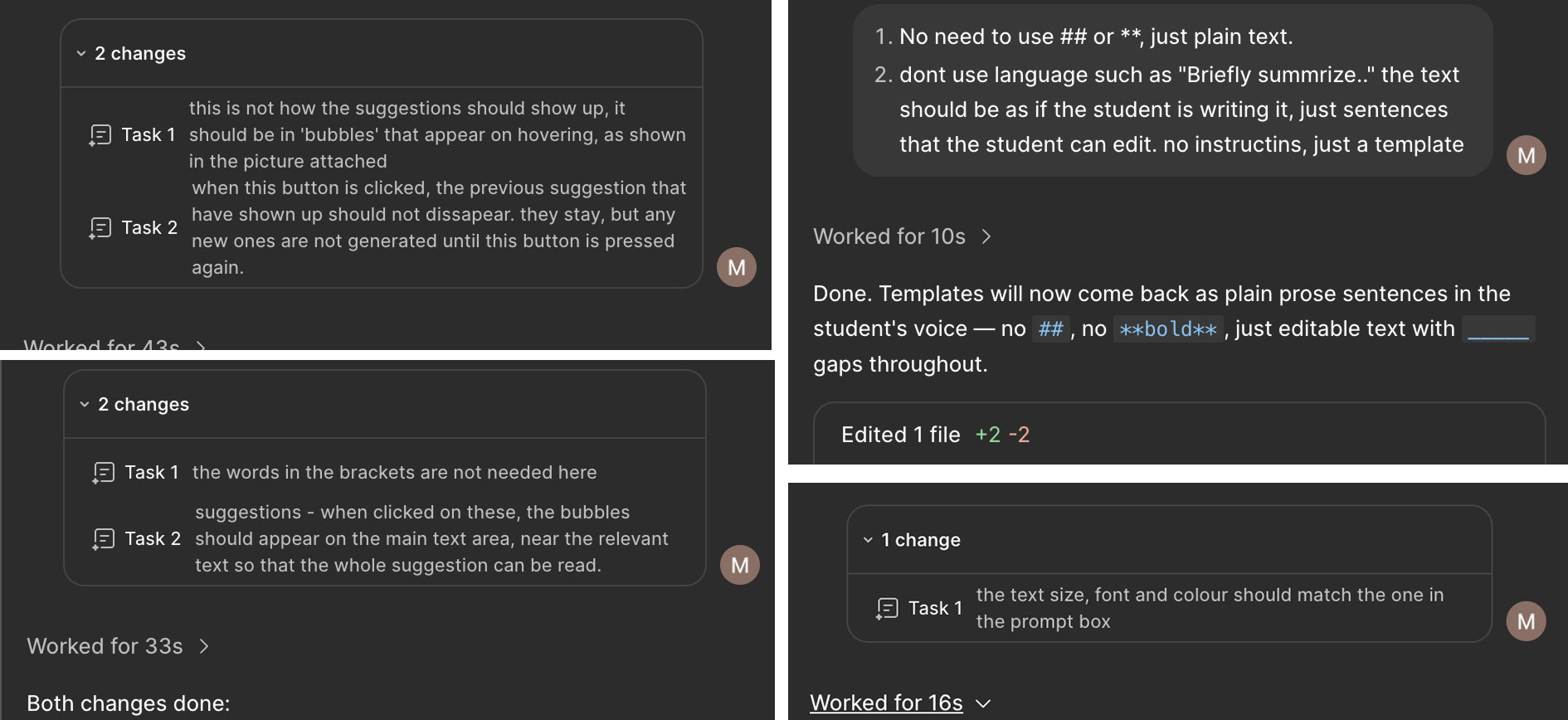
The central feature of the in-line suggestion required many inputs and tests. Being specific about the kind of feedback expected, and trying out different kinds of texts - long/ short, well-written/ incomplete, and seeing if false information is flagged. This section is a continuous work in progress.

The major issues I kept running into were API related. Failed requests, outdated formats and other file reading related errors were solved with AI help, and eventually the application was live.
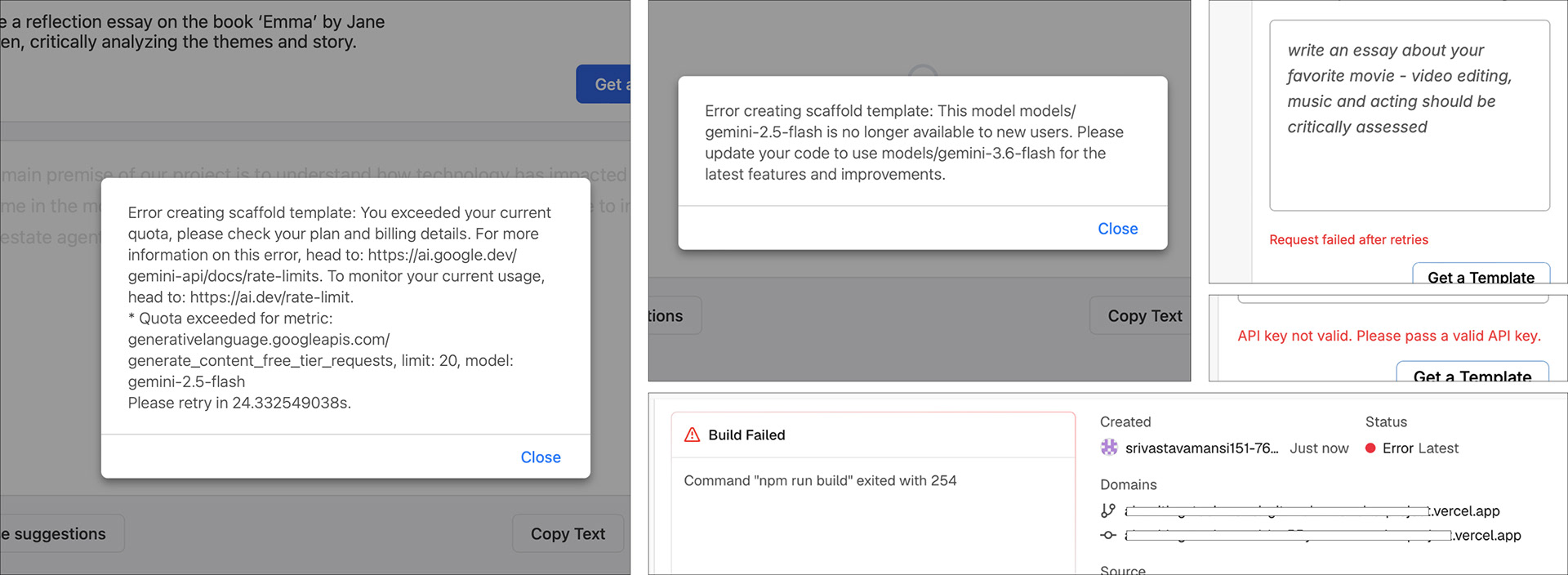
Exploring design + code to design in functional detail has been a gratifying experience. This is a new era where the gap between visual design & its developed version has lessened. A Figma file has been the the end product for a long time for designers, so building this live application was empowering; & I am glad to have added a new dimension to my toolkit.