Improving home search for people moving into a new city
Done as the Graduation Project for my undergraduate degree, this project studies the difficulties millions of people who move into urban cities for their jobs face today, intending to make settling into these cities easier. The home-search experience is picked up for a detailed investigation, and a core insight to improve this experience is identified: The gap between expectations and reality must be reduced. A mobile-application based solution is proposed to tackle this problem.
Link to full Graduation Project Document
Link to full Graduation Project Document
Duration: 6 months (2022)
Role: Product Design and UX Research
Domain: Self-led Project Academic Project
Guides: Mamta Gautam (Academic Guide), Jitesh Devadiga (Industry Guide)
Overview
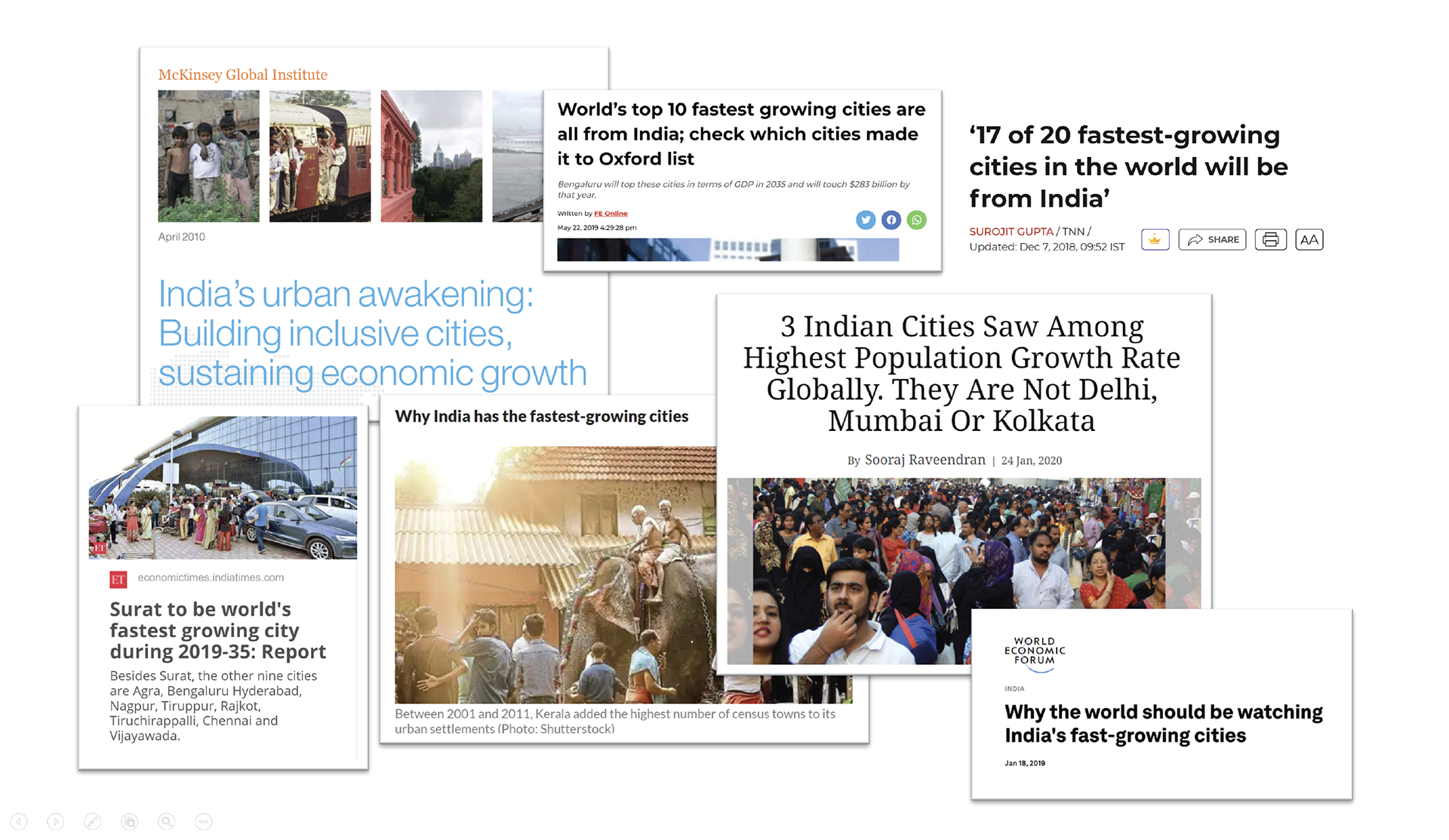
Moving into a new city can be taxing in many ways. Tasks, schedules, tickets, calls etc. In the coming decade, more people than ever before will be migrating to cities in search of better job opportunities. India is a young country, and home to some of the fastest-growing cities in the world. Delhi, Bengaluru, Pune, to name a few.
What will be the challenges faced by millions of people moving into these urban geographies?
What will be the challenges faced by millions of people moving into these urban geographies?
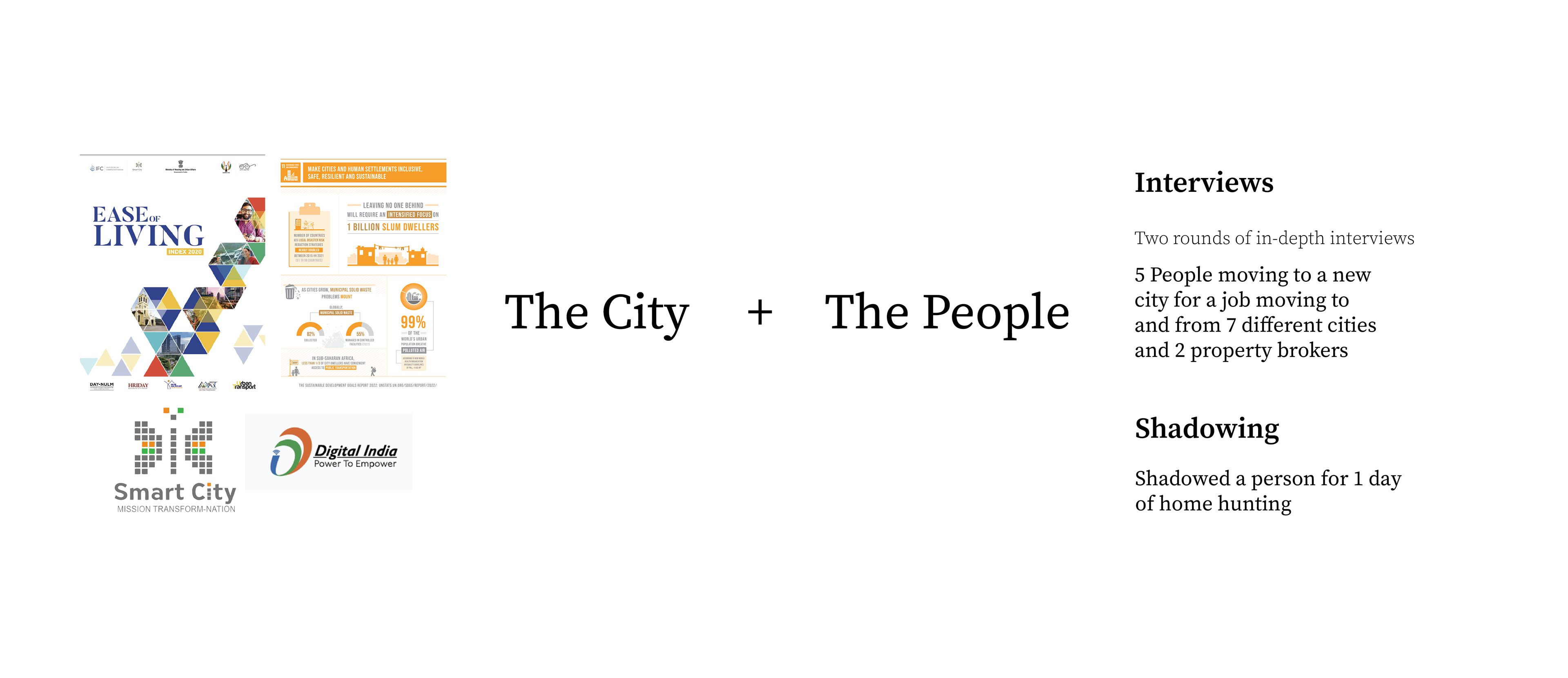
Focus in this Project: Qualitative Research
On-ground Research for problem discovery:
✨Two rounds of in-depth interviews with 5 Participants were done with people from various parts of the country to understand their needs.
✨Property owners and brokers were also interviewed in the process.
✨A shadowing exercise with a Participant while they visited houses.
✨Two rounds of in-depth interviews with 5 Participants were done with people from various parts of the country to understand their needs.
✨Property owners and brokers were also interviewed in the process.
✨A shadowing exercise with a Participant while they visited houses.
Defined initial brief
Making settling into a new city easier through human-centric digital technology.
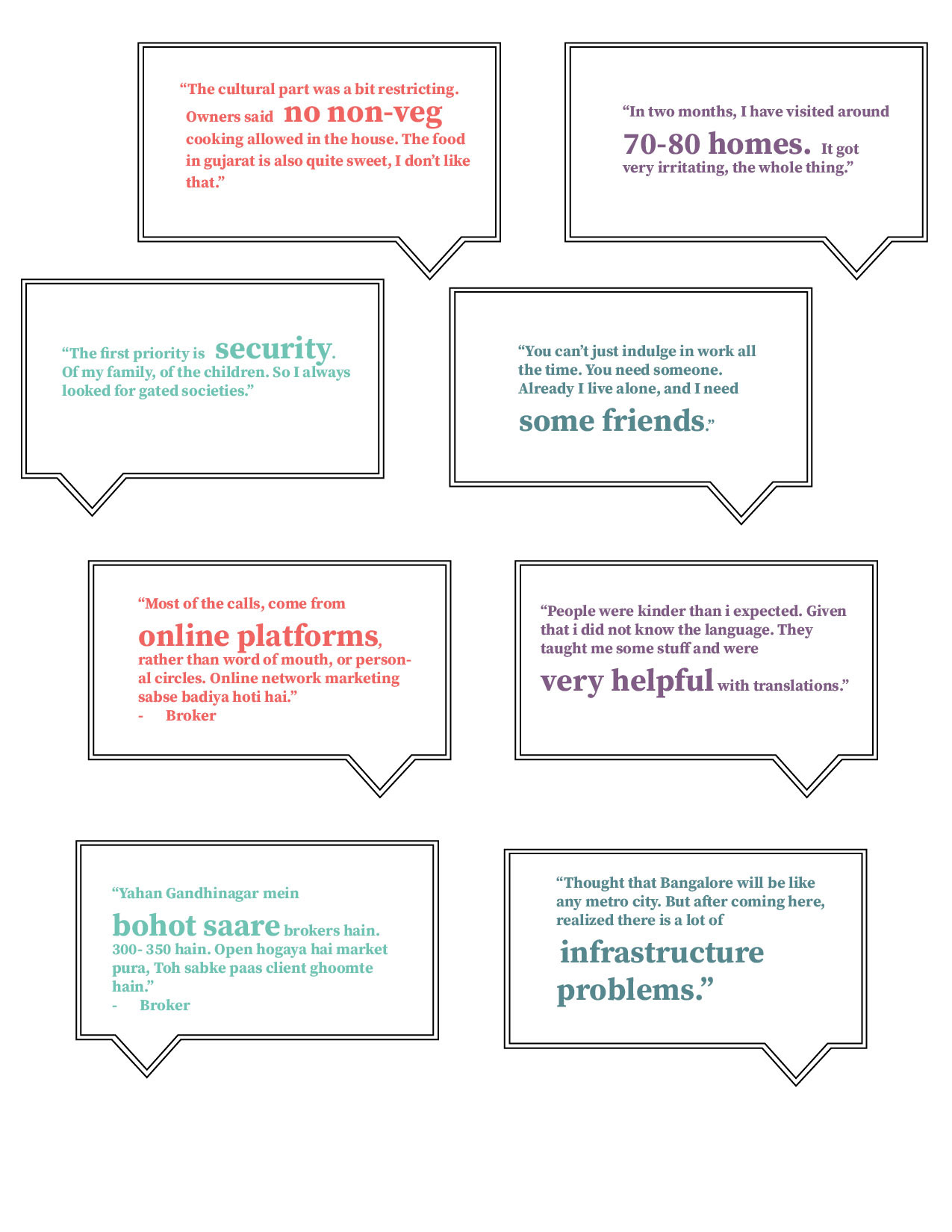
What people said
Through the discovery process, it was clear that this was a complex area to work in. Problems of all kinds were voiced by people. It became clear towards the end of this phase that the most frustrating pain-point for users was: Home Search.
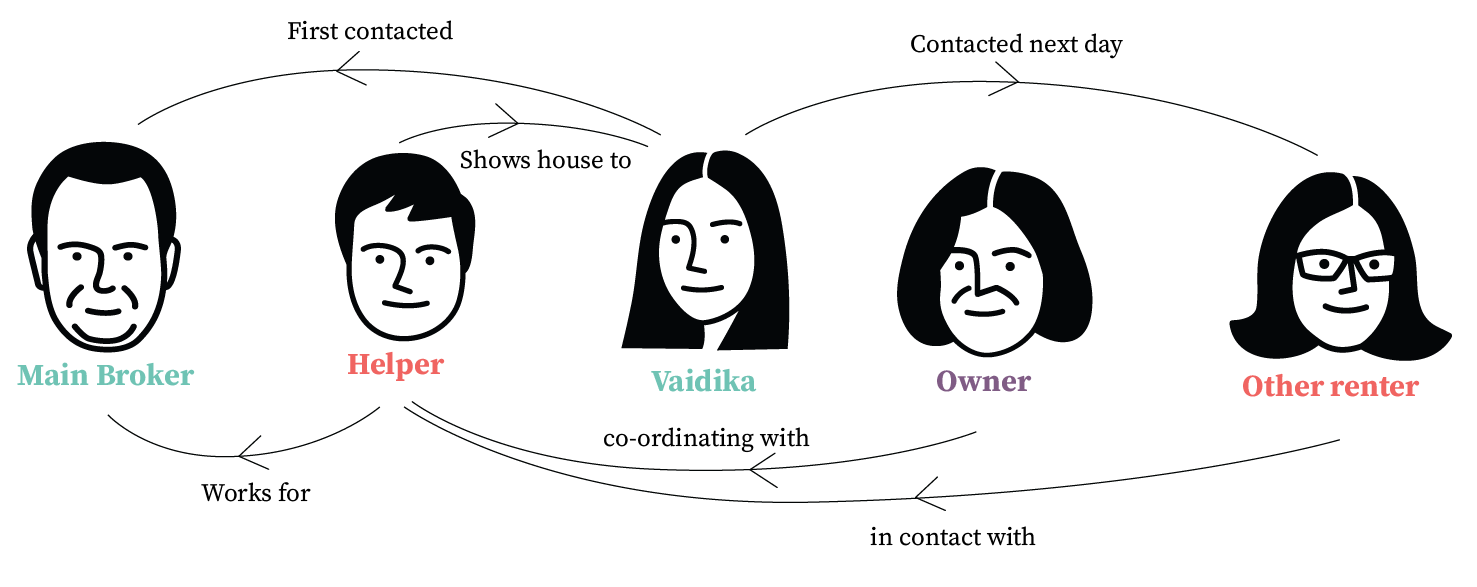
A representation of people involved in looking at just one home. It takes several weeks, and even months to find a good rental home in a new city.
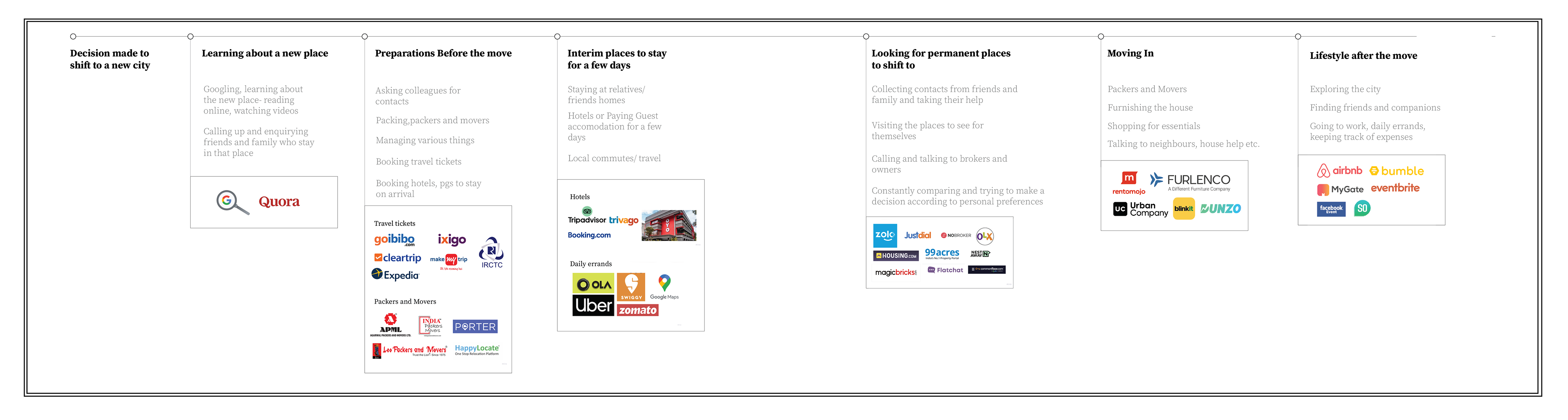
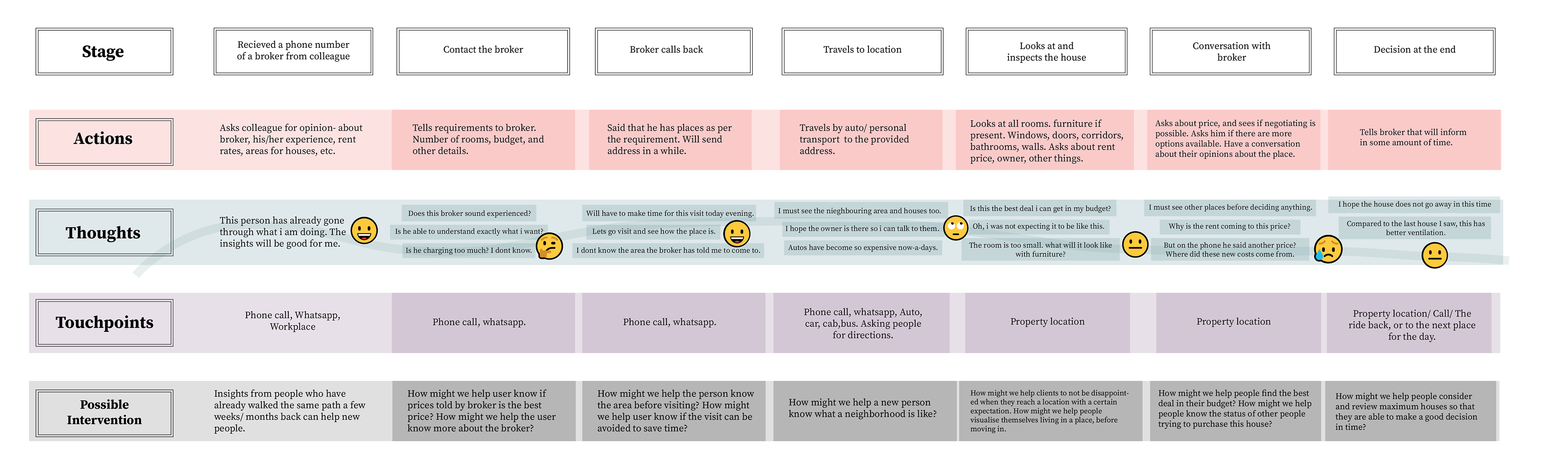
Maps made to understand user journeys in (1) overall home search (2) Visiting a home to check for renting.
(Zoom in to view details )
What do
we solve for?
we solve for?
10+ Ice berg analysis maps were made to get to the bottom of every problem raised, and discussions and opportunity analysis were done to reach a redefined brief.
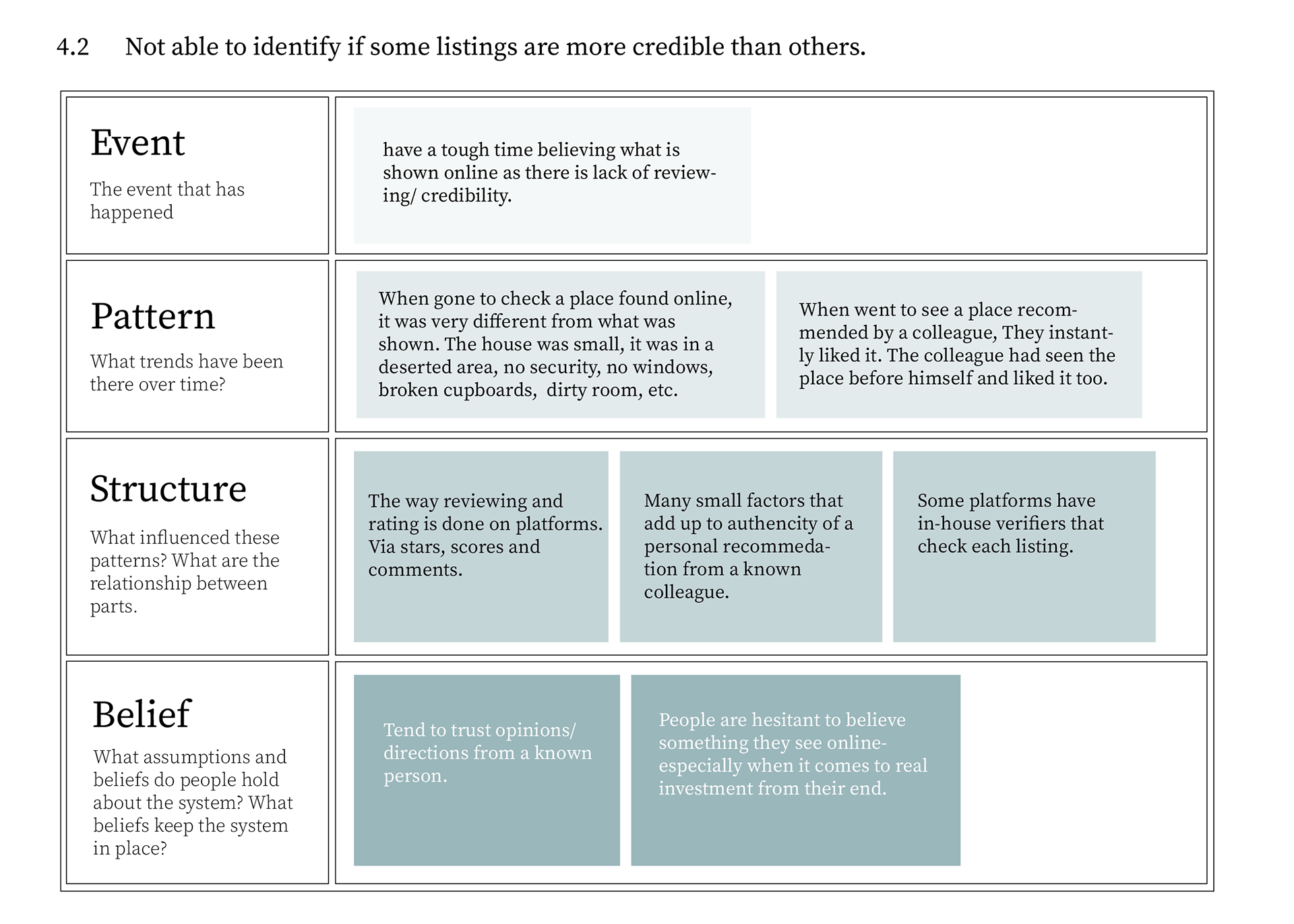
10+ iceberg Analysis maps were made to dive deep into each problem area
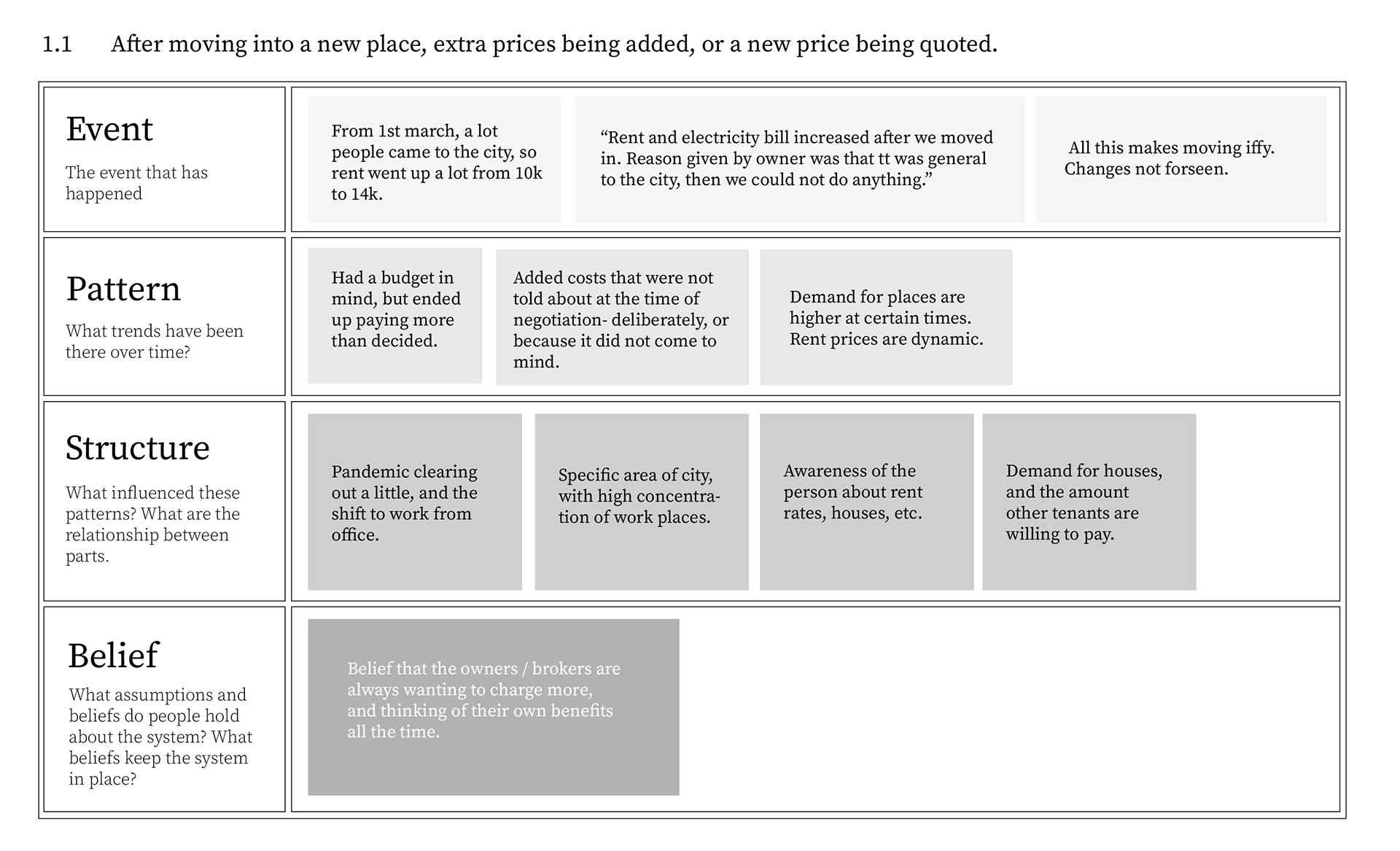
This exercise helped in root-cause-analysis.
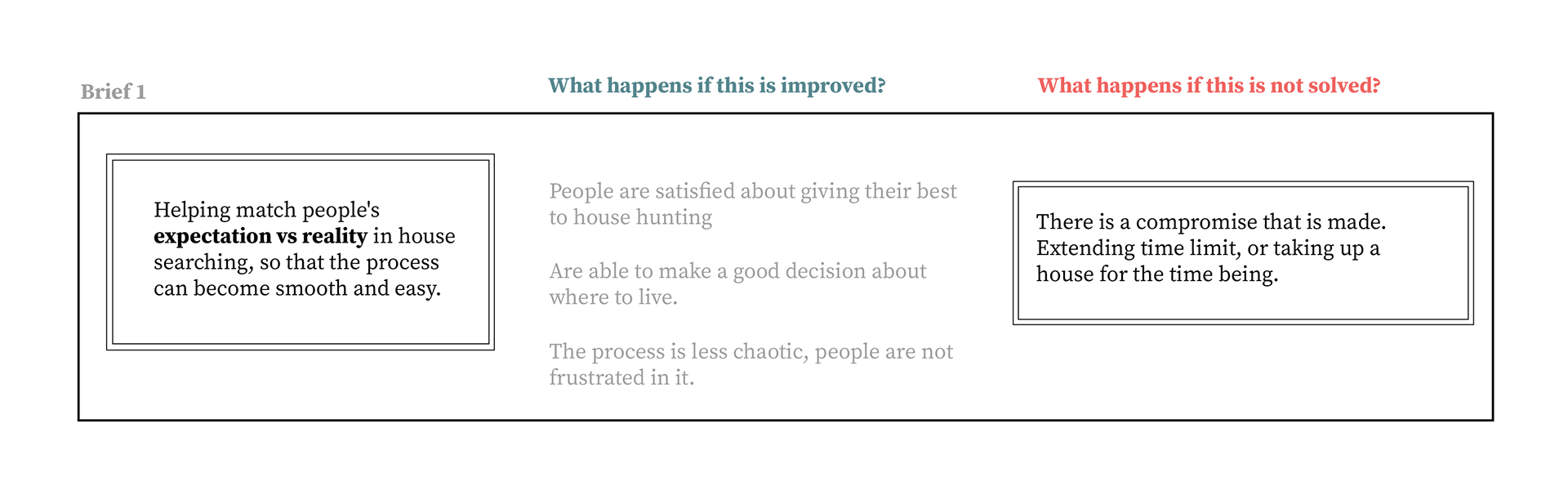
The redefined brief
Reducing the expectations v/s reality gap in the process of visiting and checking homes when choosing where to live.
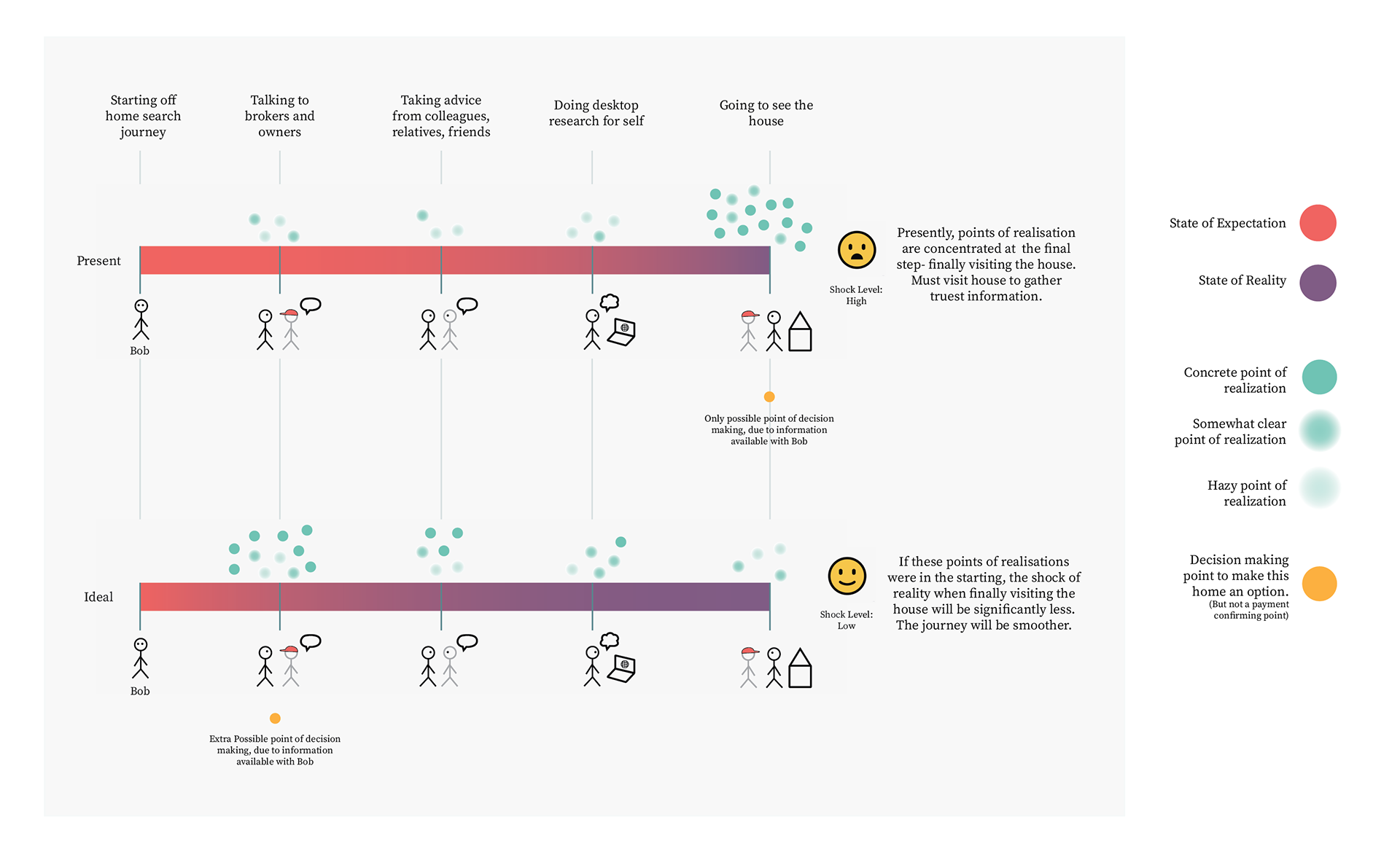
Breaking down the relationship between Expectation and Reality in home-searching.
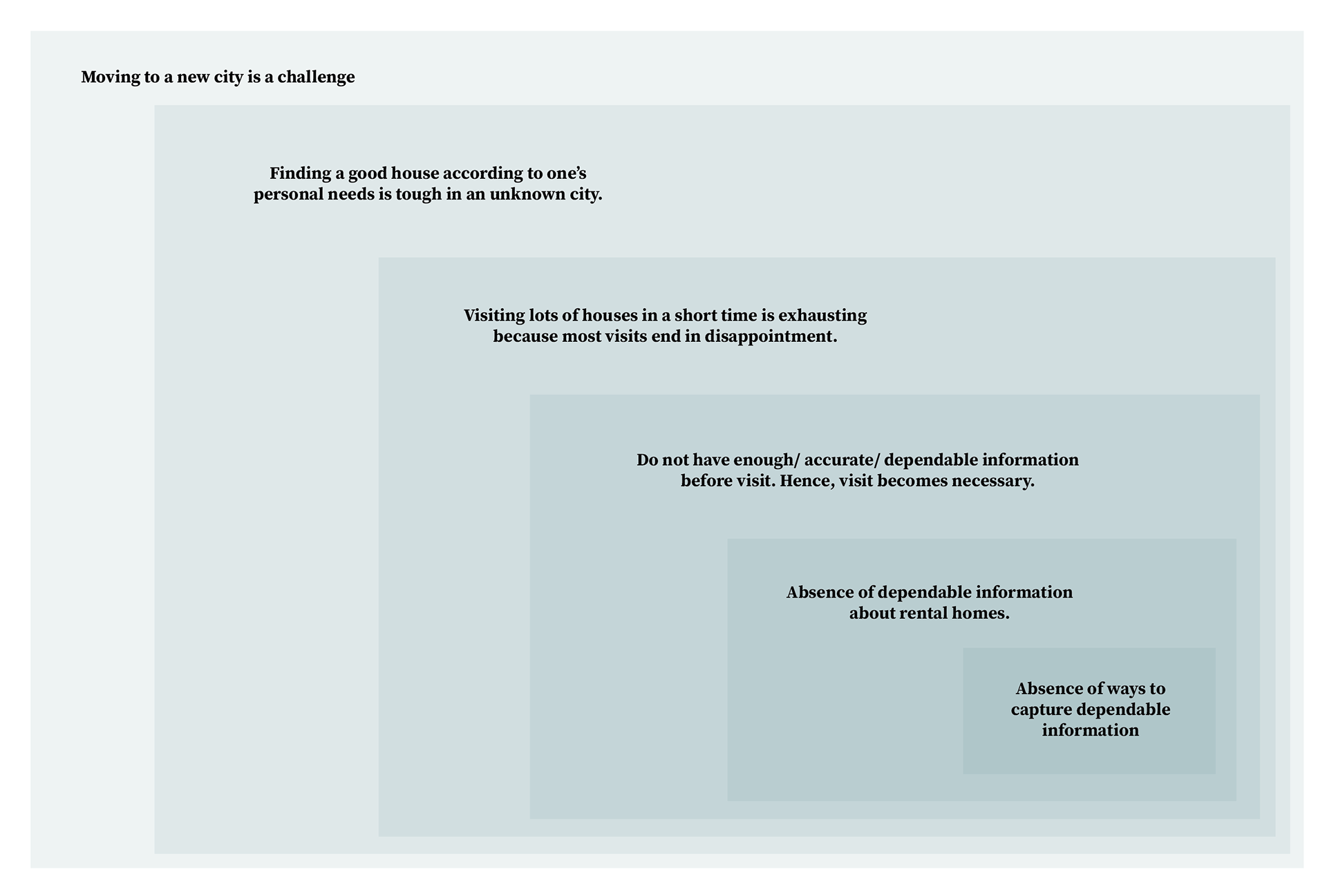
Insights that lead to reaching the "core" problem
The case for
visual information
visual information
The next checkpoint was narrowing down to visual information as a medium of closing the expectations versus reality gap.
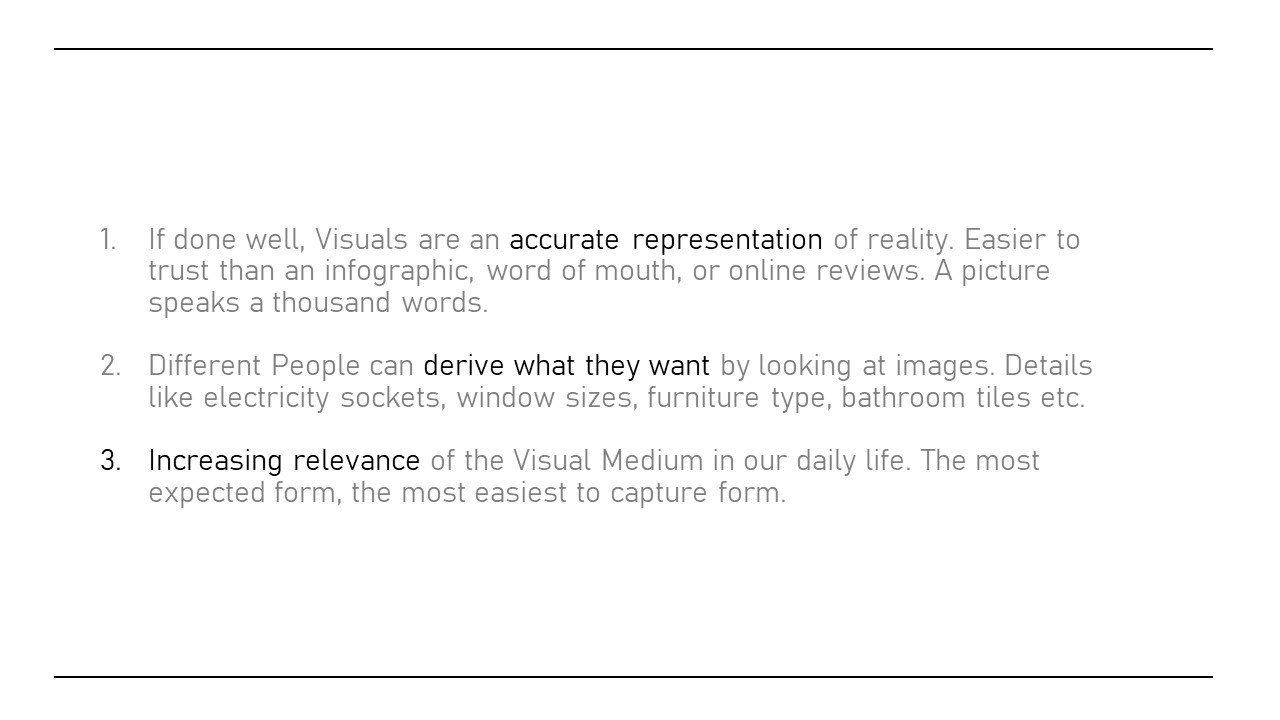
Current scenario of
visuals
visuals
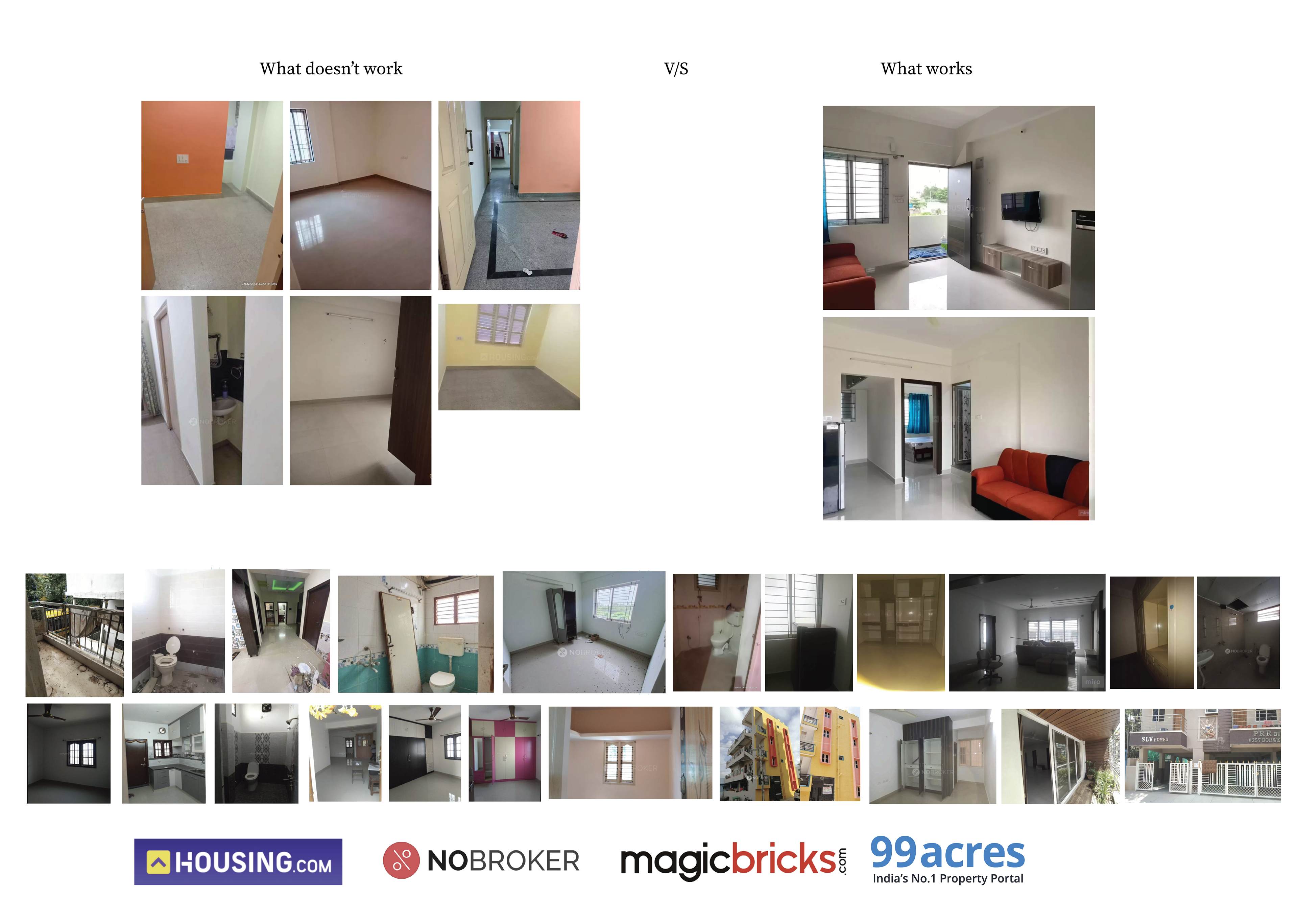
Various online platforms were browsed as a study of visuals present in the home-search world. These images were collected and mapped to see emerging patterns. What are the problems that render these images unhelpful? Why is this happening? What are the visuals that work?
Ideations
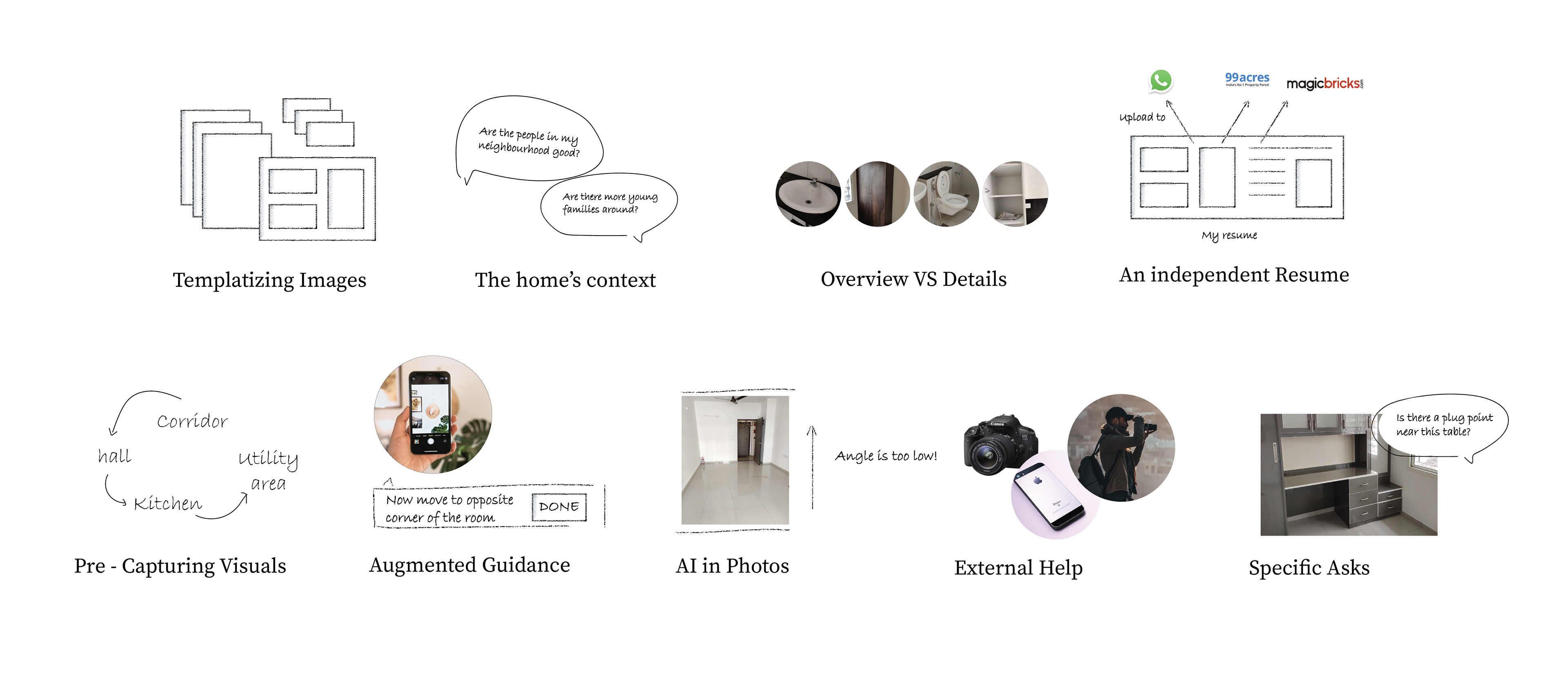
Ideations were done around the aim to help stakeholders like Home owners and Brokers capture better visuals. Also, how can these visuals best be presented to our main user: the home renter, so that it is most useful?
A Solution:
Assistive photography for better images of a home
Assistive photography for better images of a home
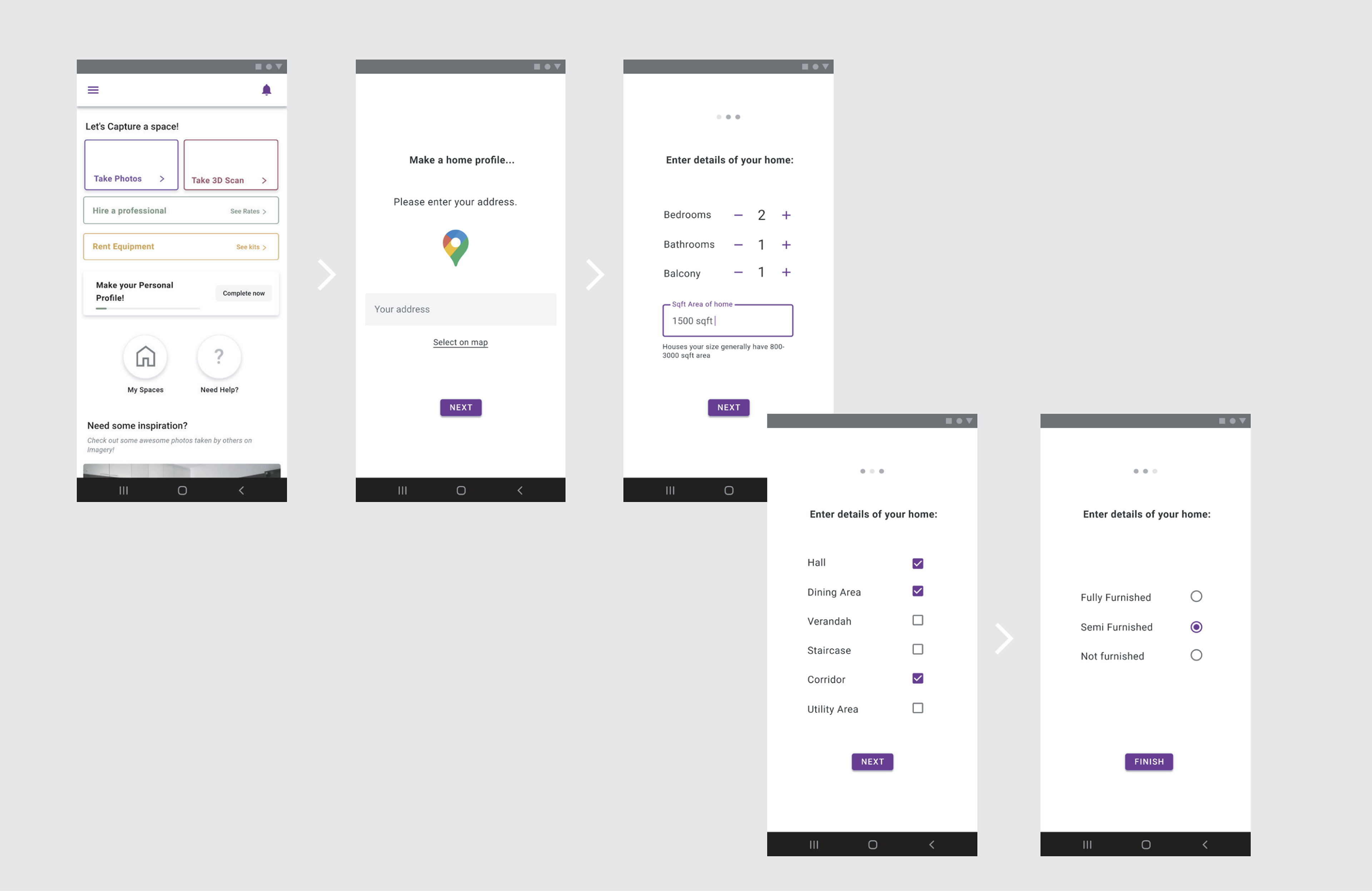
The prototyped application is an integrated photo taking assistance in the camera. It is an interaction design feature that helps anyone take better photos of their homes.
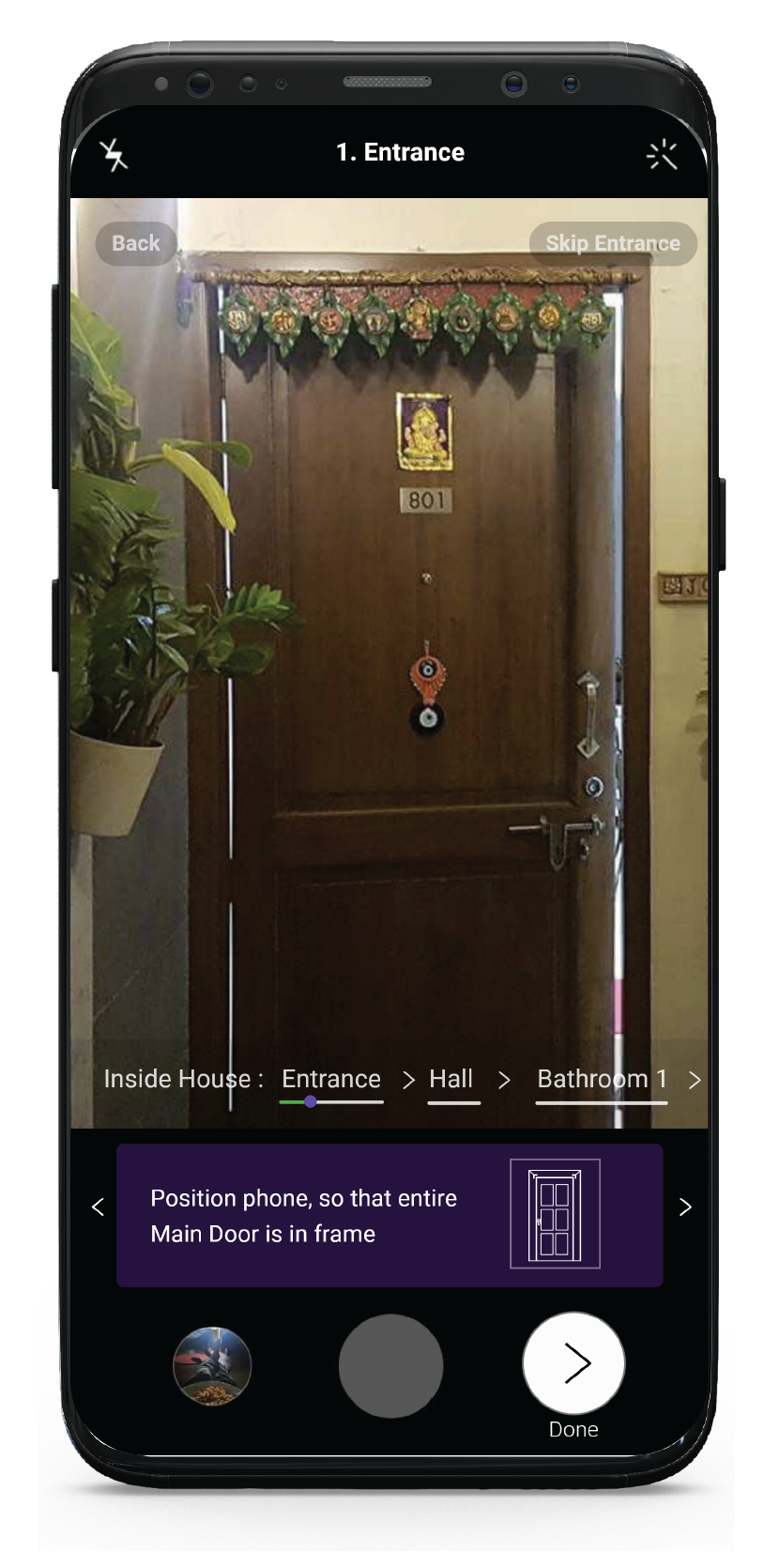
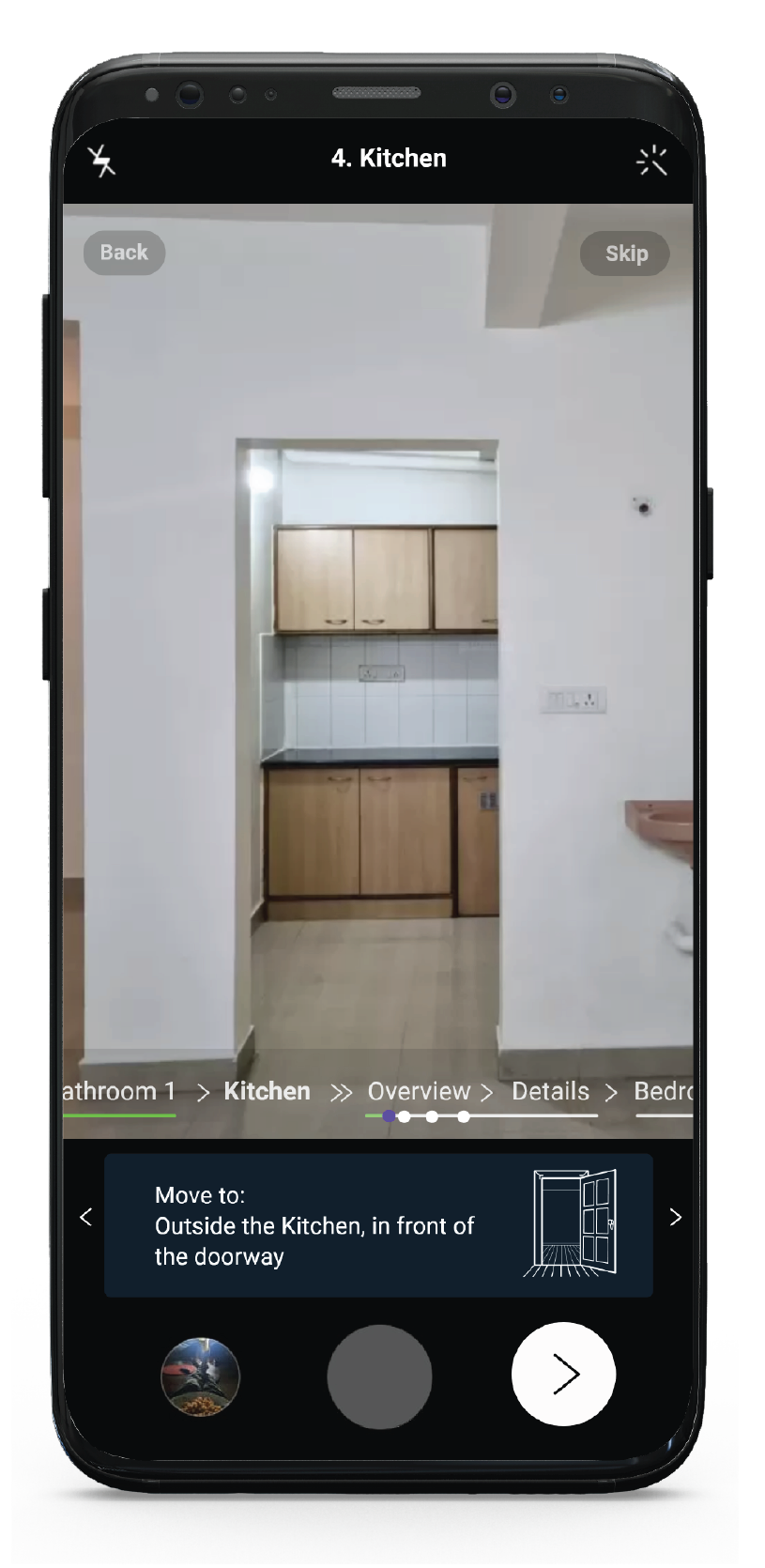
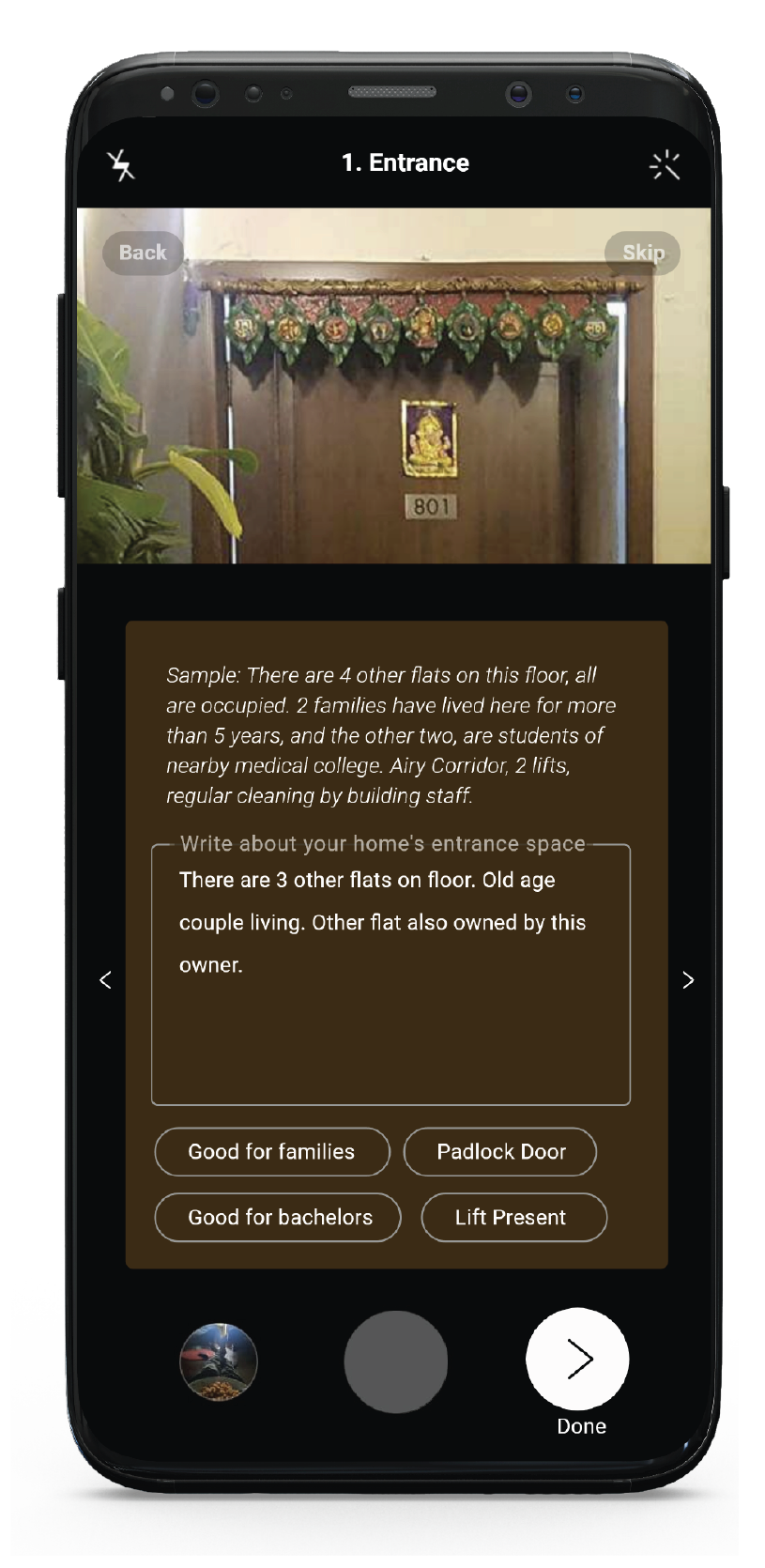
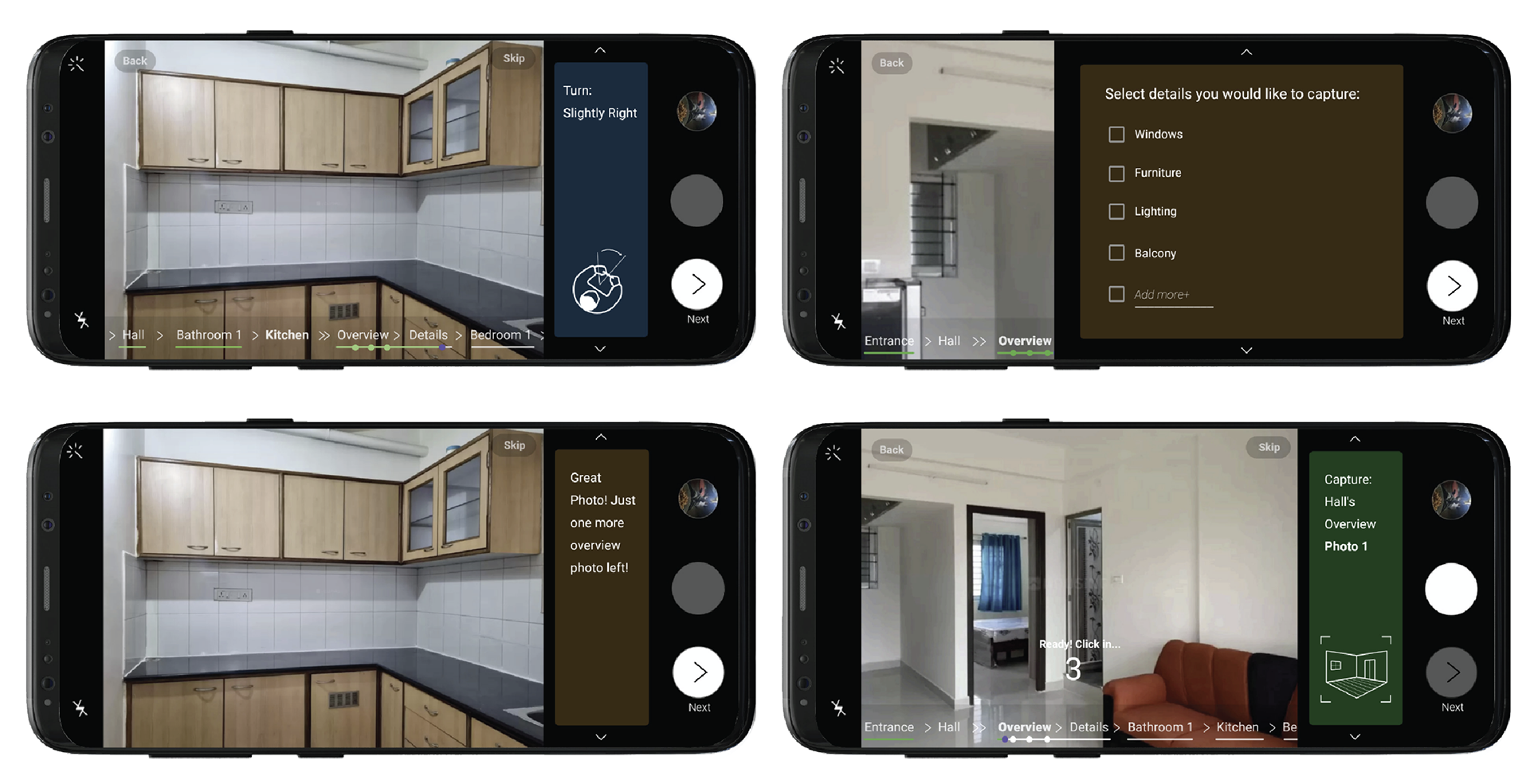
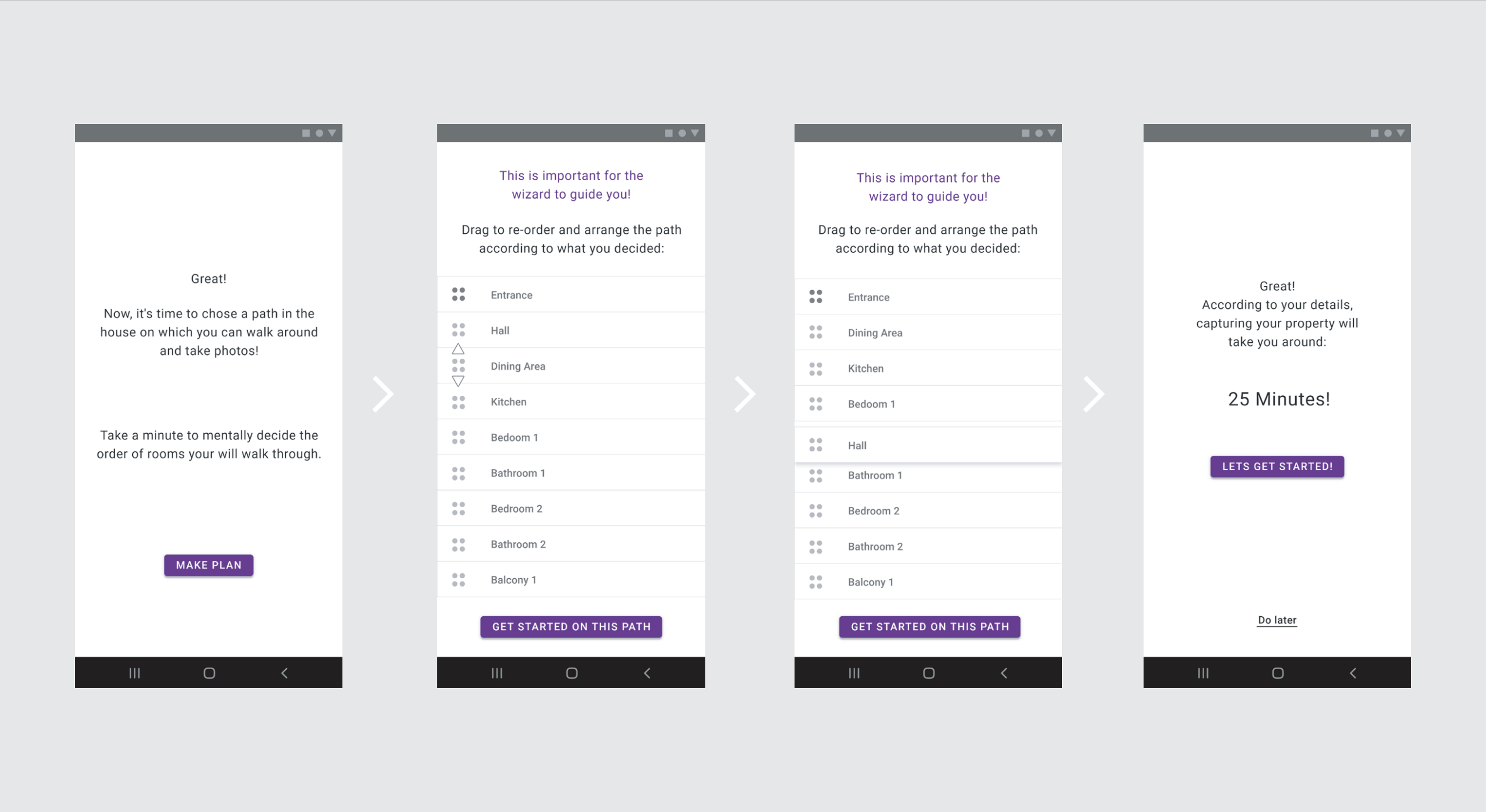
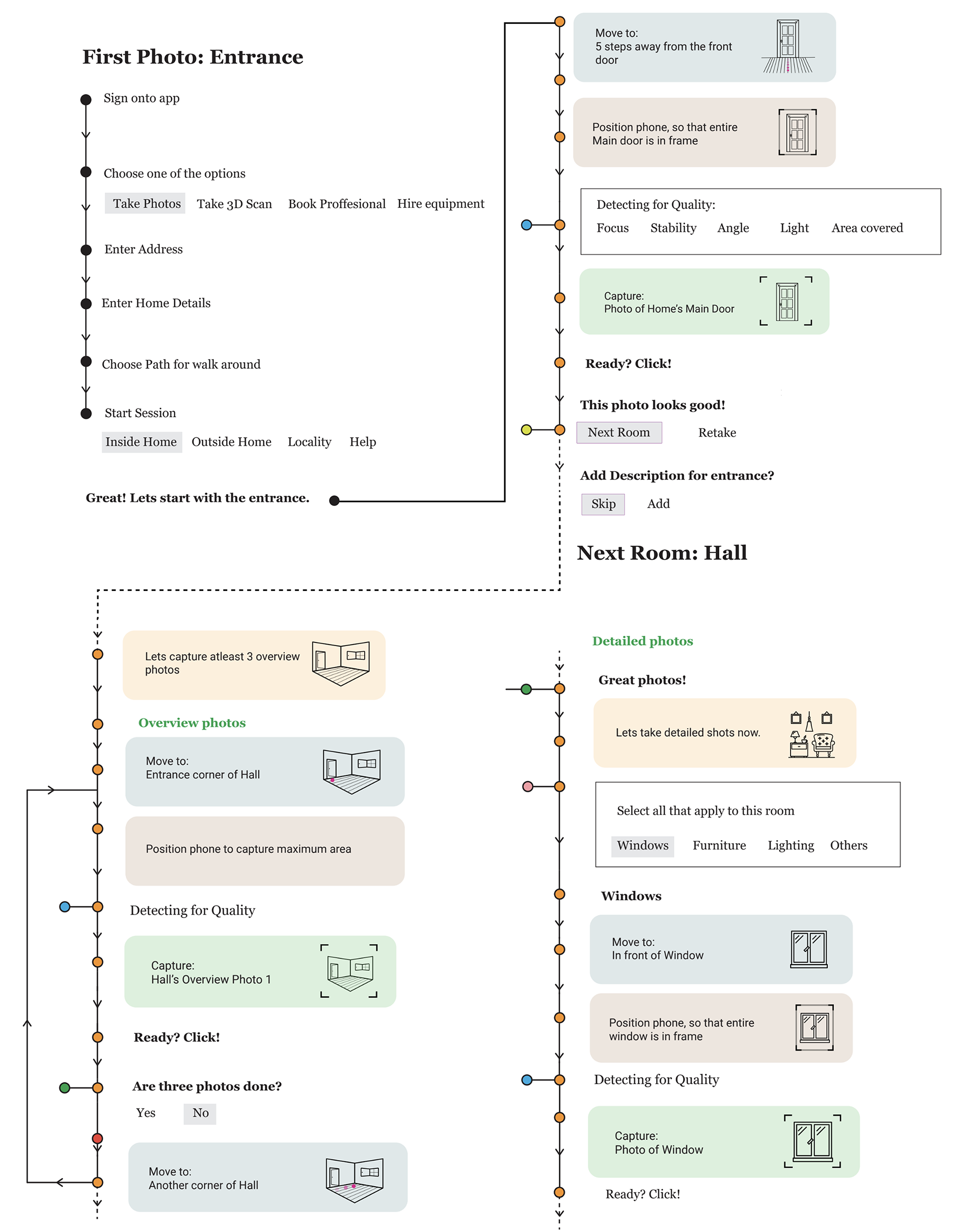
Users can make a path of how they would like to walk around their property to capture it, and along with other details, a "wizard" is set up to help them take photos.
Try the Prototype! (Start by clicking on the "Start" arrow in the image on the right to see the interactions)
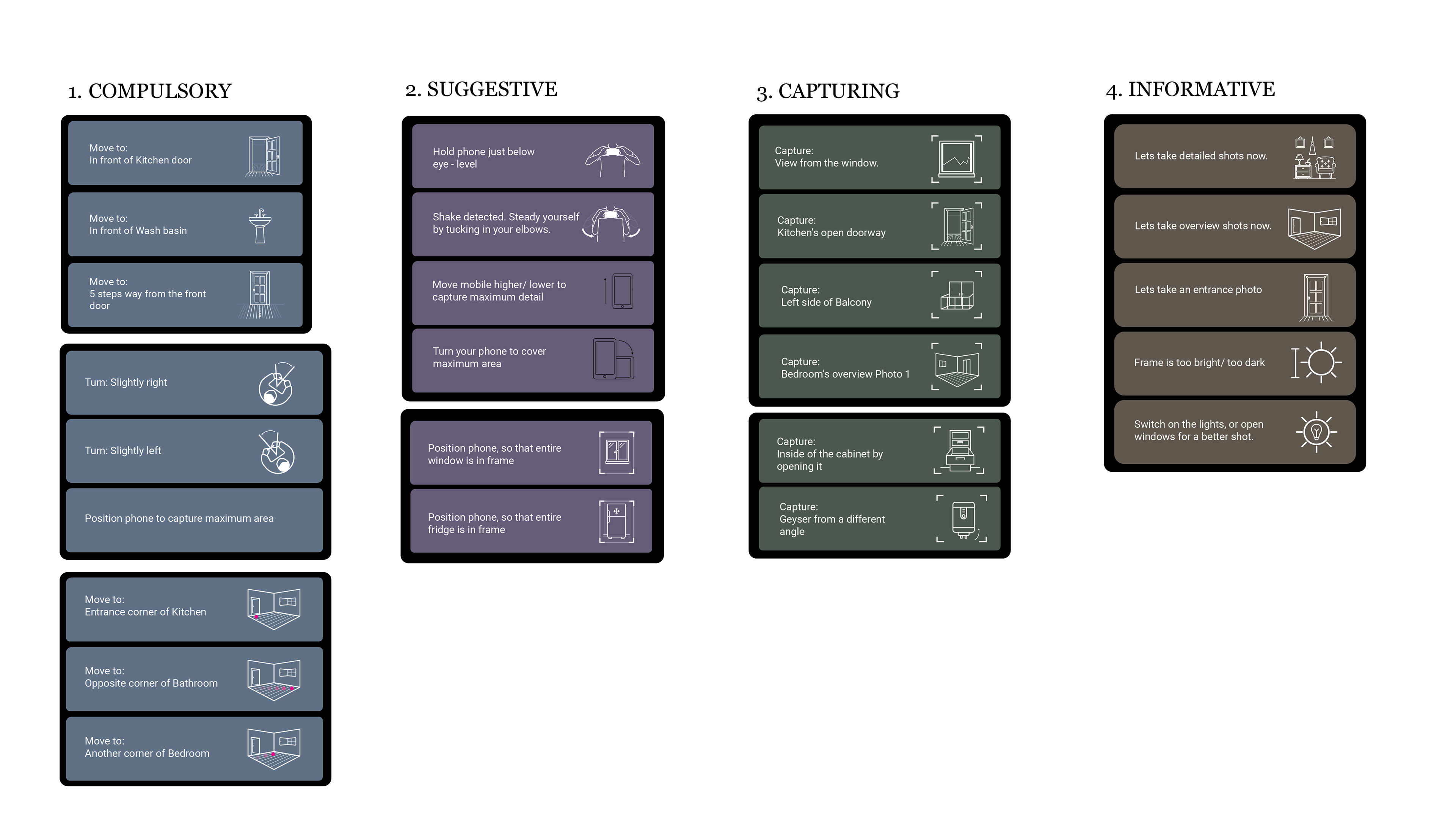
The in-camera integration was designed to be simple and easy to follow. The process of taking photos for homes was broken down into simple steps, and a template of instructions was made so that it could be customized to any home.
Concept Validation
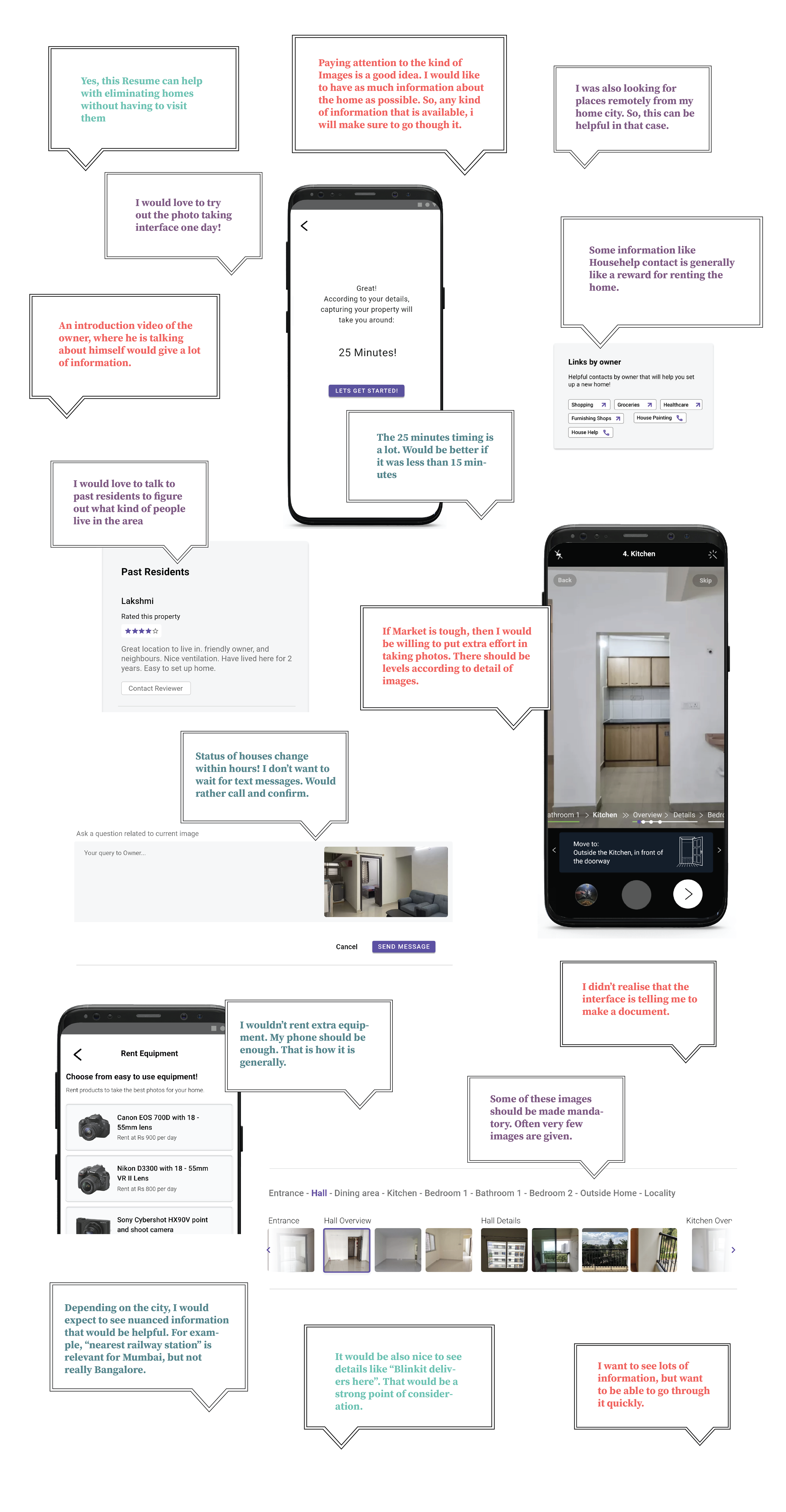
The above concept was shown to 5 Primary (Renters) and 3 Secondary (Sellers) users. Their feedback is summarized below.
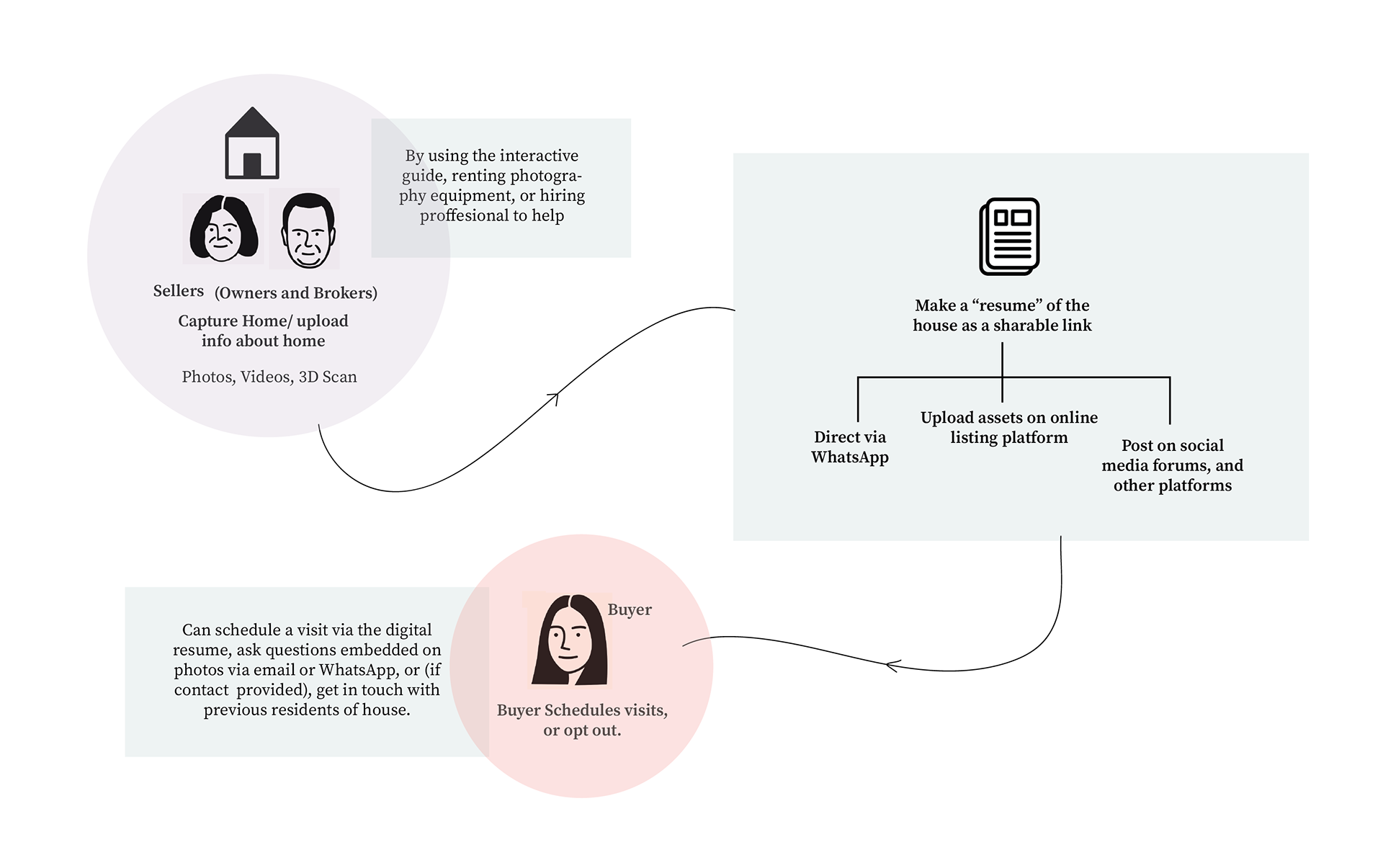
(Above) The Complete Service -Solution in a nutshell -See Graduation project Document for full solution
Reflections
Through this (long, exhausting, tiring, but extremely satisfying 😅) project, I saw how design as a puzzle-solving tool helps us tackle problems that have, all at the same time, various dimensions of physical and digital objects, interfaces, systems, stories, and narratives. I experienced the deep value of qualitative design research methods such as contextual inquiry, interviews, shadowing, and visual insights mapping and how they help us clearly understand a complex system, and lead us to articulate the right problem to solve.